Quale delle cinque sagome mostra la faccia bianca
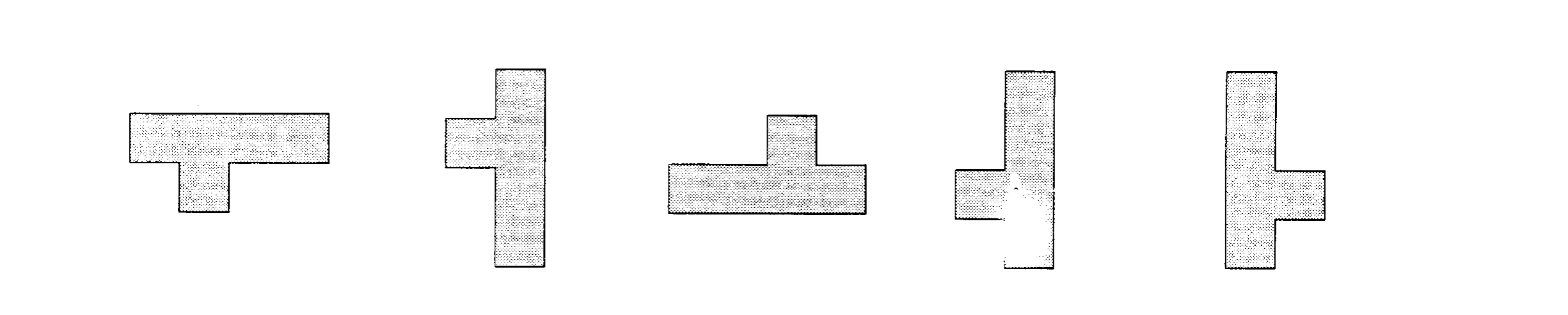
Vi sono cinque sagome di cartoncino identiche che sono bianche da un lato e nere dall’altro lato. Poste su un tavolo esse si trovano nelle posizioni in figura, quattro mostrano la faccia nera e una quella bianca. Qual è la sagoma bianca?
- (A)
- (B)
- (C)
- (D)
- (E)
Topic: Logica, giochi, strategie Abilita: Ragionamento geometrico Area: Combinatoria, Logica e Probabilita Risposta: D Fonte: apri PDF p.2
Which of the five shapes shows the white face
There are five identical cardboard shapes that are white on one side and black on the other. Posts on a table they are in the positions in the figure, four showing the black face and one the white one. What’s the white shape?
- (A)
- (B)
- (C)
- (D)
- (E)
Answer: D src_archimede_1997_2livello__Q01
Guadagno o perdita dell’antiquario nella compravendita dei comodini
Un antiquario ha comprato una coppia di comodini per 1 milione e mezzo. Ne vende uno ad Aldo e uno a Berto per un milione l’uno.
Viene Carlo che li aveva visti in vetrina, ed è disposto ad acquistare la coppia per 3 milioni e mezzo.
L’antiquario riesce a riacquistare i comodini da Aldo e Berto, pagandoli 1 milione e mezzo l’uno e li rivende a Carlo. Alla fine dei conti l’antiquario:
- (A) Ha perso mezzo milione
- (B) Ha fatto pari
- (C) Ha guadagnato mezzo milione
- (D) Ha guadagnato un milione
- (E) Nessuna delle precedenti
Topic: Logica, giochi, strategie Abilita: Lettura attenta del testo Area: Combinatoria, Logica e Probabilita Risposta: D Fonte: apri PDF p.2
Antiquary gain or loss in the sale of handbags
An antique dealer bought a pair of dresses for a million and a half. He sells one to Aldo and one to Berto for a million each.
Charles, who had seen them in the window, comes along, and he’s willing to buy the pair for three and a half million.
The antiquarian manages to buy back the dresses from Aldo and Berto, paying them one and a half million each and selling them back to Charles. At the end of the day, the antiquary:
- (A) He lost half a million.
- (B) He’s made it even.
- (C) He earned half a million.
- (D) He made a million.
- (E) None of the above
Answer: D src_archimede_1997_2livello__Q02
Sbarra acciaio-gomma con stesso peso invertendo i materiali
100 delegati sono riuniti in congresso. Non tutti portano la cravatta, ma si sa che comunque se ne scelgano due, almeno uno dei due la porta. Quanti sono i congressisti con cravatta?
- (A) Almeno 2, ma possono essere meno di 50
- (B) Esattamente 50
- (C) Più di 50, ma non si può dire esattamente quanti
- (D) La situazione descritta è impossibile
- (E) Nessuna delle precedenti
Topic: Algebra Area: Algebra e Analisi Risposta: C Fonte: apri PDF p.2
Steel-rubber bar of equal weight by reversing the materials
100 delegates are assembled in the congress. Not everyone wears a tie, but we know that if you choose two, at least one of them will get the door. How many congressmen are in ties?
- (A) At least two, but less than 50
- (B) Exactly 50
- (C) More than 50, but you can’t say exactly how many
- (D) The situation described is impossible.
- (E) None of the above
Answer: C src_archimede_1997_2livello__Q03
Quanti congressisti su 100 portano la cravatta
Una striscia è costituita da un cilindro interno di acciaio di raggio cm rivestito da uno strato di gomma leggera di spessore costante. Sapendo che invertendo i materiali il peso della striscia resta invariato, determinare lo spessore del rivestimento.
- (A) cm
- (B) cm
- (C) cm
- (D) Dipende dalla lunghezza della striscia
- (E) Nessuna delle precedenti
Topic: Logica, giochi, strategie Area: Combinatoria, Logica e Probabilita Risposta: E Fonte: apri PDF p.2
How many congressmen out of 100 wear a tie
A strip consists of an internal steel cylinder of cm radius coated with a layer of light rubber of constant thickness. Knowing that when the materials are reversed the weight of the strip remains unchanged, determine the thickness of the coating.
- (A) cm
- (B) cm
- (C) cm
- (D) Depends on the length of the strip
- (E) None of the above
Answer: E src_archimede_1997_2livello__Q04
Cifra delle unità di una potenza di 2
Un antiquario ha comprato una coppia di comodini per 1 milione e mezzo. Ne vende uno ad Aldo e uno a Berto per un milione l’uno. Viene Carlo che Ii aveva visti in vetrina, ed è disposto ad acquistare la coppia per 3 milioni e mezzo. L’antiquario riesce a riacquistare i comodini da Aldo e Berto, pagandoli 1 milione e mezzo l’uno e li rivende a Carlo. Alla fine dei conti l’antiquario:
- (A) Ha perso mezzo milione
- (B) Ha fatto pari
- (C) Ha guadagnato mezzo milione
- (D) Ha guadagnato un milione
- (E) Nessuna delle precedenti 100 delegati sono riuniti in congresso. Non tutti portano la cravatta, ma si sa che comunque se ne scelgano due, almeno uno dei due la porta. Quanti sono i congressisti con cravatta? (A) Almeno 2, ma possono essere meno di 50 (B) Esattamente 50 (C) Più di 50, ma non si può dire esattamente quanti (D) La situazione descritta è impossible (E) Nessuna delle precedenti
Topic: Teoria dei Numeri Abilita: Riconoscimento di pattern Area: Aritmetica e Teoria dei Numeri Risposta: B Fonte: apri PDF p.2
Number of units of a power of 2
An antique dealer bought a pair of dresses for a million and a half. He sells one to Aldo and one to Berto for a million each. Charles, who had seen them in the window, is coming, and he’s willing to buy the pair for three and a half million. The antiquarian manages to buy the dresses back from Aldo and Berto, paying them 1 million and a half each and selling them back to Charles. At the end of the antiquarian accounts:
- (A) He lost half a million.
- (B) He’s made it even.
- (C) He earned half a million.
- (D) He made a million.
- (E) None of the previous 100 delegates met in Congress. Not everyone wears a tie, but we know that if you choose two, at least one of them will get the door. How many congressmen are in ties? (A) At least 2, but they can be less than 50 (B) Exactly 50 (C) More than 50, but you can’t say exactly how many (D) The situation described is impossible (E) None of the above
Answer: B src_archimede_1997_2livello__Q05
Avanzamento di una sfera che ruota su due binari
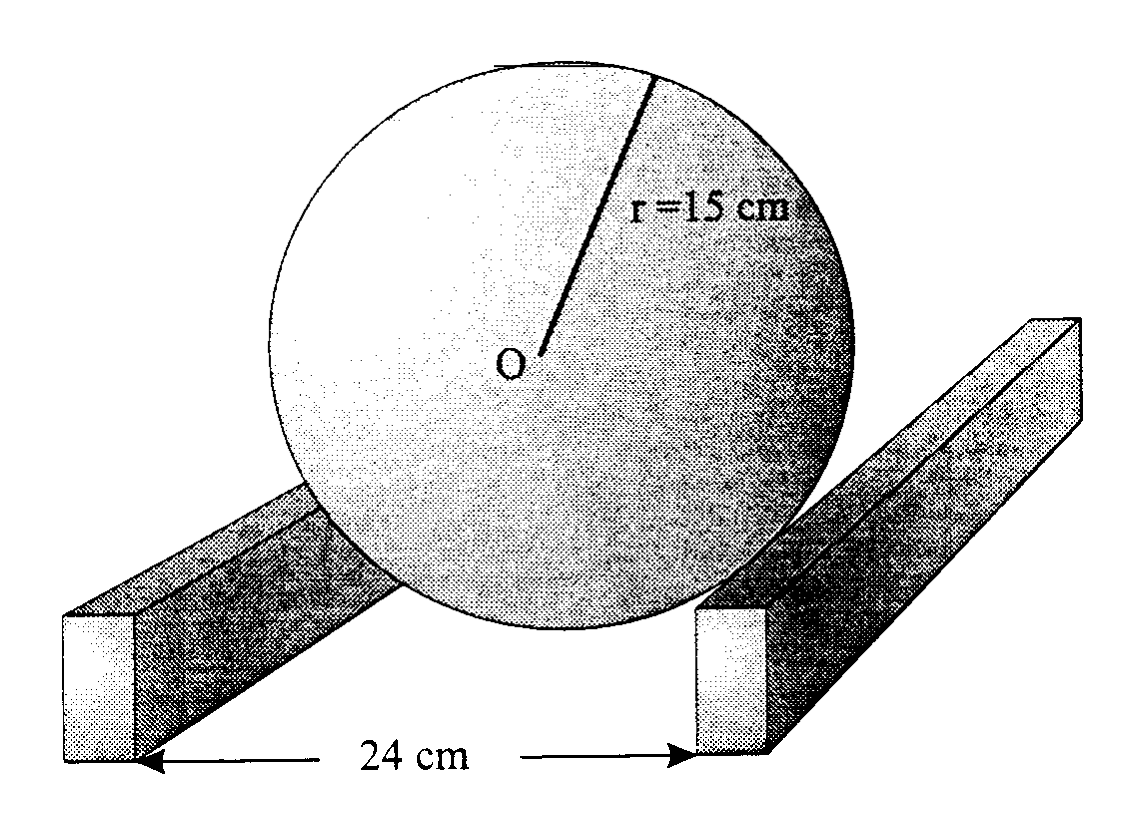
Una sfera di raggio r = 15 cm è appoggiata su due binari distanti fra loro 24 cm come in figura. Se la sfera fa una rotazione completa, di quanto avanza sui binari? (A) 24 c m (B) 30 cm
Topic: Geometria solida Abilita: Ragionamento geometrico Area: Geometria Risposta: D Fonte: apri PDF p.3
Forwarding of a sphere rotating on two tracks
A sphere of radius r = 15 cm is supported on two tracks 24 cm apart as shown in Figure 1. If the sphere makes a complete rotation, how much progress on the tracks? (A) 24 c m (B) 30 cm
Answer: D src_archimede_1997_2livello__Q06
Quale numero non è prodotto di quadrato per cubo
Quale fra questi numeri non è il prodotto di un quadrato perfetto per un cubo perfetto?
- (A) 900
- (B) 961
- (C) 968
- (D) 972
- (E) 980
Topic: Teoria dei Numeri Metodo: manipolazione algebrica Area: Aritmetica e Teoria dei Numeri Risposta: E Fonte: apri PDF p.3
Which number is not a product of square per cube
Which of these numbers is not the product of a perfect square for a perfect cube?
- (A) 900
- (B) 961
- (C) 968
- (D) 972
- (E) 980
Answer: E src_archimede_1997_2livello__Q07
Posizione finale dopo 1997 passi su foglio a quadretti
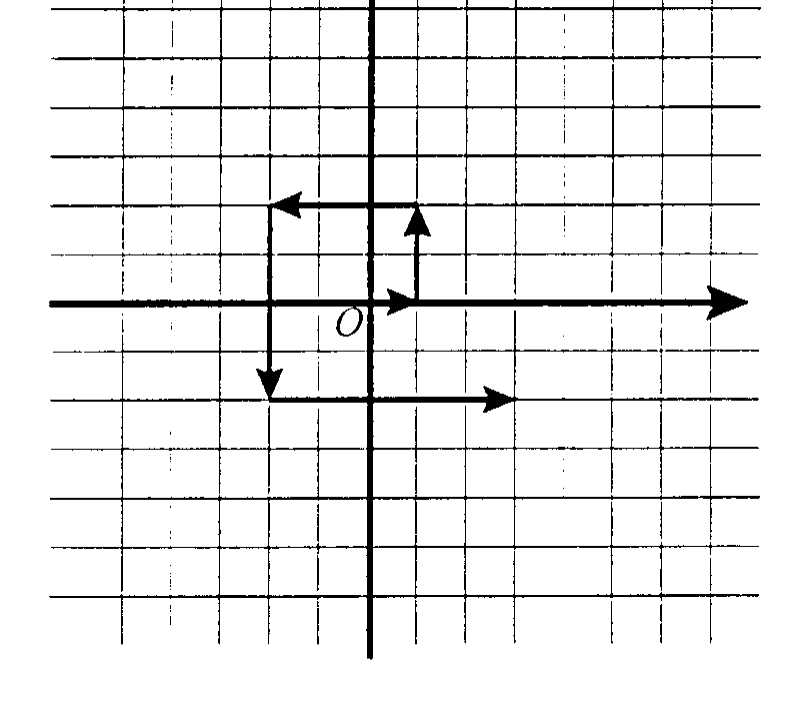
Fissiamo un punto O nell’intersezione di due Iinee di un foglio a quadretti e indichiamo Ie quattro direzioni parallele alle linee come Nord, Sud, Est, Ovest (il Nord in alto). Muoviamoci, partendo da O di un quadretto verso Est, poi due verso Nord, tre verso Ovest, quattro verso Sud, cinque verso Est e così via. Dopo 1997 passi, in che punto ci troviamo rispetto al punto iniziale O?
- (A) 1996 quadretti a Nord di O
- (B) 998 quadretti a Sud e 999 quadretti a Est di O
- (C) 999 quadretti a Ovest e 998 quadretti a Nord di O
- (D) 999 quadretti a Nord e 999 quadretti a Ovest di O
- (E) 998 quadretti a Est e 998 quadretti a Sud di O
Topic: Algebra Metodo: congruenze Abilita: Conteggio sistematico Area: Algebra e Analisi Risposta: B Fonte: apri PDF p.3
Final position after 1997 steps on square sheet
Let us place a point O at the intersection of two yines of a square sheet and indicate the four directions parallel to the lines as North, South, East, West (North up). Let’s move from O to a square to the east, then two to the north, three to the west, four to the south, five to the east, and so on. After the 1997 steps, where are we from the starting point O?
- (A) 1996 squares north of O
- (B) 998 squares south and 999 squares east of O
- (C) 999 squares west and 998 squares north of O
- (D) 999 squares north and 999 squares west of O
- (E) 998 squares east and 998 squares south of O
Answer: B src_archimede_1997_2livello__Q08
Successioni di colori di calzini senza due uguali vicini
Tre paia di calzini, uno rosso, uno blu e uno verde, sono stesi in fila. Sapendo che due calzini dello stesso colore non sono vicini uno all’altro, quante successioni di colori si possono avere?
- (A) 15
- (B) 24
- (C) 30
- (D) 36
- (E) Nessuna delle precedenti
Topic: Combinatoria Metodo: Conteggio combinatorio Abilita: Conteggio sistematico Area: Combinatoria, Logica e Probabilita Risposta: C Fonte: apri PDF p.3
Success of colours of socks without two identical neighbours
Three pairs of socks, one red, one blue, and one green, are laid out in line. Knowing that two socks of the same color are not close to each other, how many sequences of colors can you have?
- (A) 15
- (B) 24
- (C) 30
- (D) 36
- (E) None of the above
Answer: C src_archimede_1997_2livello__Q09
Disequazione con soluzione l’esagono disegnato
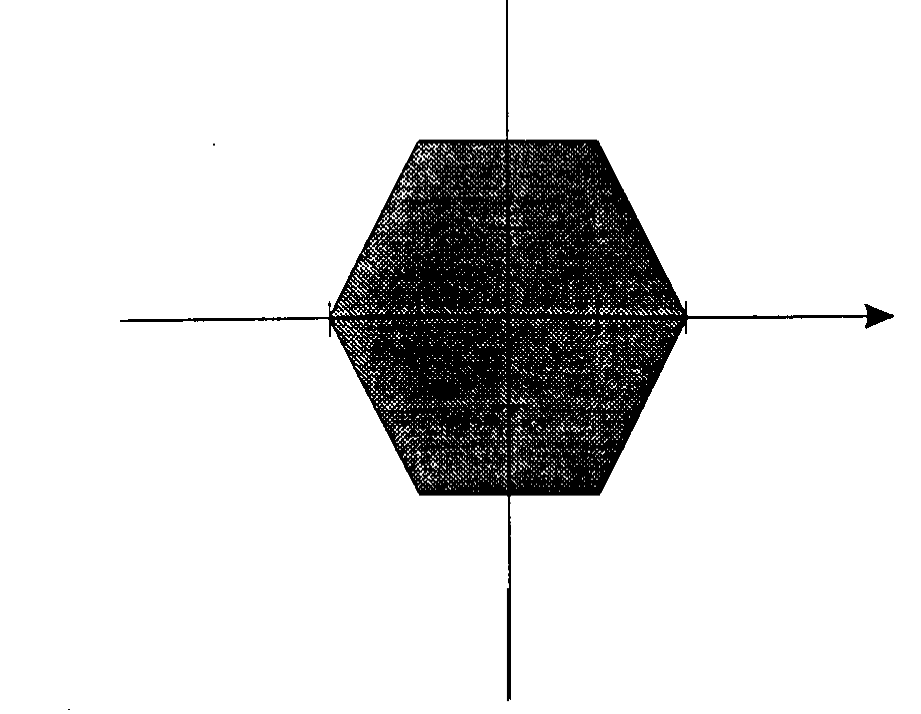
Quale delle seguenti disequazioni ha come soluzione l’insieme disegnato in figura?
Topic: Geometria analitica Metodo: Metodo delle coordinate Area: Geometria Risposta: D Fonte: apri PDF p.3
Drying with solution the hexagon drawn
Which of the following dissections has the solution as shown in the figure?
Answer: D src_archimede_1997_2livello__Q10
Area della figura tratteggiata con sei cerchi piccoli
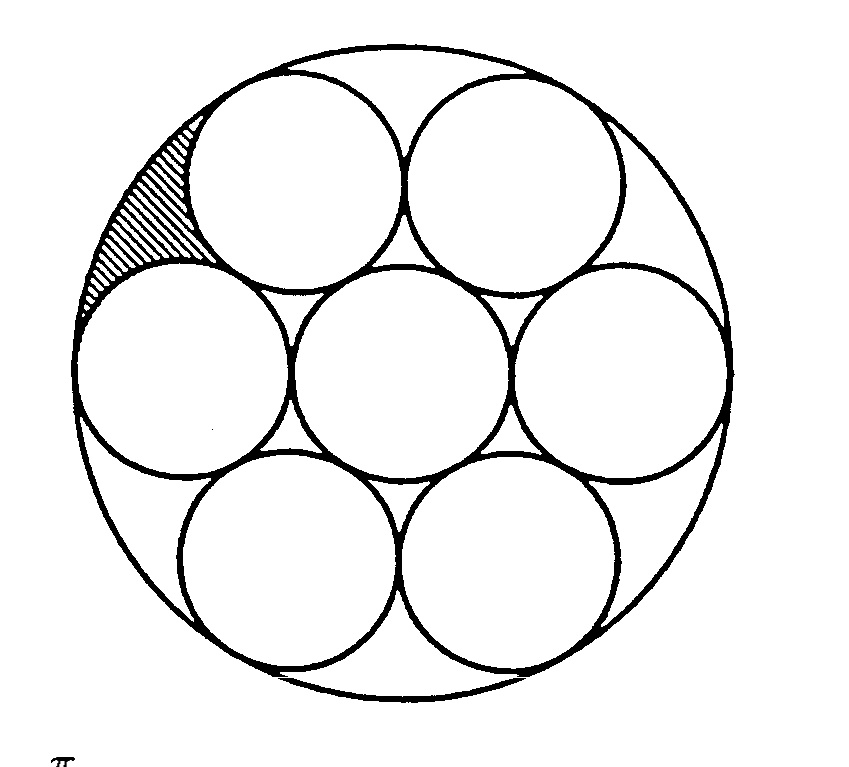
Nella figura a fianco il raggio dei cerchi piccoli è 1. Quanto vale l’area della figura tratteggiata? (D) (E) Nessuna delle risposte precedenti
Topic: Geometria piana Abilita: Ragionamento geometrico Area: Geometria Risposta: C Fonte: apri PDF p.4
Area of the figure drawn with six small circles
In the next figure, the radius of the small circles is 1. How much is the area of the drawn figure? (D) (E) None of the above answers
Answer: C src_archimede_1997_2livello__Q11
Massimo intero con stesso numero di cifre in base 10 e 16
Qual è il massimo numero intero positivo che ha lo stesso numero di cifre in base 10 e in base 16? (Le risposte sono espresse in base 10) (A) 1024 (B) 99’999 (c) 999”999 (D) 1“600’000 (E) Nessuna delle precedenti
Topic: Teoria dei Numeri Area: Aritmetica e Teoria dei Numeri Risposta: B Fonte: apri PDF p.4
Maximum integer with the same number of digits in base 10 and 16
What is the maximum positive integer that has the same number of digits on base 10 and base 16? (The answers are given in footnote 10) (A) 1024 (B) 99999 (c) 999999 (D) 1600000 (E) None of the above
Answer: B src_archimede_1997_2livello__Q12
Probabilità che il gioco con gettoni non si interrompa
Tre amici possiedono ciascuno tre gettoni. Dopo ogni partita il vincitore riceve un gettone da ognuno degli altri due amici. Qual è la probabilità che il gioco non si debba interrompere entro cinque partite poiché uno dei giocatori rimane senza gettoni?
Topic: Probabilita e statistica Metodo: Analisi per casi Area: Combinatoria, Logica e Probabilita Risposta: A Fonte: apri PDF p.4
Probability that the game with tokens will not be interrupted
Three friends each own three tokens. After each match the winner receives a token from each of the other two friends. What is the probability that the game will not have to be stopped within five games because one of the players is left with no chips?
Answer: A src_archimede_1997_2livello__Q13
Area massima del quadrilatero CDNM nel quadrato unitario
Sia dato un quadrato ABCD di lato unitario e siano M, N due punti rispettivamente sui lati AB e AD tali che AM = AN. Quanto può valere, al massimo, l’area del quadrilatero CDNM?
Topic: Geometria piana Metodo: Principio di estremalita Area: Geometria Risposta: D Fonte: apri PDF p.4
Maximum area of the CDNM quadrilateral in the unit square
Given a square ABCD of the unit side, and M, N two points on the sides AB and AD respectively, such that AM = AN. What is the maximum value of the CDNM quadrilateral area?
Answer: D src_archimede_1997_2livello__Q14
Massimo MCD di tre dispari distinti minori di 100
Siano a, b, c tre numeri positivi dispari distinti e minori di 100. Quanto può essere, al massimo, il loro massimo comune divisore? (A) 7 (B) 11 ( c ) 1 9 (D) 25 (E) Nessuna delle risposte precedenti
In un quadrilatero convesso ABCD i lati AB, BC, CD sono uguali. Inoltre AC = BD = AD, Quanto misura I’angolo in D?
Topic: Teoria dei Numeri Metodo: Principio di estremalita Area: Aritmetica e Teoria dei Numeri Fonte: apri PDF p.4
Major MCD of three distinct displays less than 100
Let a, b, c be three distinct odd positive numbers less than 100. What is their maximum common divisor? (A) 7 (B) 11 (c) 19 (D) 25 (E) None of the previous answers
In an ABCD convex quadrilateral the sides AB, BC, CD are equal. Also AC = BD = AD, What is the angle in D?
src_archimede_1997_2livello__Q15
angolo in D
In un quadrilatero convesso i lati , , sono uguali. Inoltre . Quanto misura l’angolo in ?
Topic: Geometria piana Abilita: Ragionamento geometrico Area: Geometria Fonte: apri PDF p.5
angle in D
In a convex quadrilateral the sides , , are equal. In addition, . What is the angle in ?
src_archimede_1997_2livello__Q16
Coppie (m,n) naturali con mn = p(m+n), p primo
Dato un numero primo , determinare tutte le coppie ordinate di numeri naturali che verificano l’equazione:
Topic: Teoria dei Numeri Metodo: manipolazione algebrica Abilita: Manipolazione algebrica Area: Aritmetica e Teoria dei Numeri Risposta: (2p,2p), (p²+p,p+1), (p+1,p²+p) Fonte: apri PDF p.6
*Natural pairs (m,n) with mn = p(m+n), p prime *
Given a prime number , determine all ordered pairs of natural numbers that verify the equation:
Answer: (2p,2p), (p²+p,p+1), (p+1,p²+p) src_archimede_1997_2livello__Q17