problema 1
A Matelandia è buona abitudine assegnare a taluni numeri una “forma” geometrica. Ad esempio, il numero è un numero quadrato e triangolare, ovvero si può sia scrivere come quadrato, , sia si può rappresentare come un triangolo equilatero con base 8, infatti . Qual è il più piccolo numero quadrato e triangolare più grande di 36?
Topic: Combinatoria Abilita: Lettura attenta del testo Area: Combinatoria, Logica e Probabilita Fonte: apri PDF p.1
This is a problem for all of us.
In Matelandia it is a good practice to assign some numbers a geometric “shape”. For example, the number is a square and triangular number, that is, it can either be written as a square, , or it can be represented as an equilateral triangle with base 8, in fact . What’s the smallest square and triangular number greater than 36?
src_archimede_2003_pubblico__Q01
problema 2
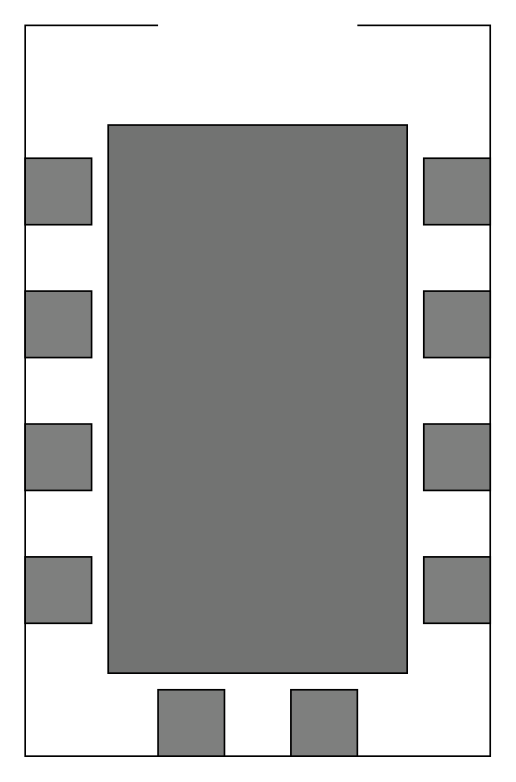
La sala consiliare della città di Matelandia è molto piccola: ci stanno solamente 10 seggiole contro i muri di tre lati della stanza (l’ingresso è sul quarto lato) e un tavolo al centro.
All’inizio di ogni riunione il sindaco entra per primo e i 9 consiglieri entrano rigorosamente in ordine di età: dal più anziano al più giovane.
Il sindaco sceglie dove sedersi, mentre ciascuno dei consiglieri, a causa delle ristrettezze del luogo, deve sedersi accanto a qualcuno che si è già sistemato. In quanti modi diversi può disporsi il consiglio? (vedi figura)
Topic: Geometria piana Abilita: Ragionamento geometrico Area: Geometria Fonte: apri PDF p.1
This is the first time I have seen this.
The town hall of Matelandia is very small: there are only 10 seats against the walls on three sides of the room (the entrance is on the fourth side) and a table in the center.
At the beginning of each meeting the mayor enters first and the nine councillors enter strictly by age: from the oldest to the youngest.
The mayor chooses where to sit, while each councillor, due to the restrictions of the place, has to sit next to someone who has already settled down. How many different ways can the council be disposed of? (see figure)
src_archimede_2003_pubblico__Q02
problema 3
La principale banca della città ha una cassaforte con una combinazione a quattro cifre, che per sicurezza il direttore cambia ogni giorno in questo modo: moltiplica la combinazione attuale per 3 ed eventualmente taglia la cifra più a sinistra. Una sera uno dei cassieri spiando il direttore scopre che la combinazione non contiene cifre dispari. La sera dopo una delle guardie giurate riesce a scoprire che nessuna delle cifre è multiplo di 3. La sera successiva un ladro prova ad aprire la cassaforte e dopo vari tentativi si accorge che le cifre devono essere tutte multiple di 3, ma non riesce a penetrare nella cassaforte. Il giorno seguente il ladro ascolta per caso la guardia e il cassiere e viene a sapere ciò che avevano scoperto. Quale combinazione dovrebbe tentare il ladro tornando a svaligiare la banca quella sera stessa?
Topic: Combinatoria Abilita: Conteggio sistematico Area: Combinatoria, Logica e Probabilita Fonte: apri PDF p.1
This is the first time I have seen this.
The city’s main bank has a safe with a four-digit combination, which for security reasons the manager changes every day like this: he multiplies the current combination by 3 and possibly cuts the number to the left. One night, one of the cashiers spying on the manager discovers that the combination does not contain odd numbers. The night after, one of the sworn guards manages to find out that none of the digits is a multiple of 3. The next night a thief tries to open the safe and after several attempts he realizes that the numbers must all be multiples of 3, but he can’t penetrate the safe. The next day the thief accidentally listens to the guard and the cashier and learns what they have discovered. What combination would tempt the thief back to rob the bank that same night?
src_archimede_2003_pubblico__Q03
problema 4
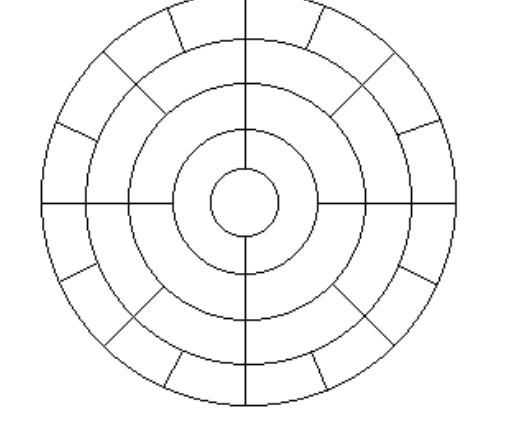
Nel parco di Matelandia, i bambini si divertono a saltellare da una casella all’altra del tracciato rappresentato a fianco. Si parte dalla casella posta al centro e si salta di casella in casella senza mai tornare verso l’interno, e senza mai ripassare da una casella già visitata. Quando si arriva al bordo ci si ferma. In quanti modi diversi è possibile raggiungere la periferia? (vedi figura)
Topic: Geometria piana Abilita: Ragionamento geometrico Area: Geometria Fonte: apri PDF p.1
This is the first time I have seen this.
In Matelandia Park, children enjoy jumping from box to box on the sidewalk. It starts from the box in the center and jumps from box to box without ever going back inside, and without ever going back from a box you already visited. When you get to the edge, you stop. How many different ways can you get to the periphery? (see figure)
src_archimede_2003_pubblico__Q04
problema 5
La compagnia aerea Air Matelandia ha uno strano modo di calcolare il prezzo dei biglietti di andata e ritorno. Il prezzo espresso in MatEuro è pari alla velocità media dell’aereo (rispetto al suolo) calcolata su entrambi i viaggi ed espressa in km/h, moltiplicata per la durata complessiva dei due viaggi (andata e ritorno) espressa in ore. Damiano si imbarca su un volo che viaggia alla velocità costante di 400 km/h rispetto all’aria. Durante tutto il viaggio di andata ha un vento contrario di 40 km/h, durante il viaggio di ritorno ha lo stesso vento a favore. Sapendo che i due viaggi di Damiano sono complessivamente durati 2 ore, quanti MatEuro è costato il suo biglietto?
Topic: Teoria dei Numeri Abilita: Lettura attenta del testo Area: Aritmetica e Teoria dei Numeri Fonte: apri PDF p.2
This is the problem.
The airline Air Matelandia has a strange way of calculating the price of return tickets. The price expressed in MatEuro is equal to the average speed of the aircraft (as compared to the ground) calculated on both journeys and expressed in km/h, multiplied by the total duration of the two journeys (departure and return) expressed in hours. Damiano is boarding a flight that travels at a constant speed of 400 km/h relative to the air. During the whole journey it has an opposite wind of 40 km/h, during the return journey it has the same wind in favour. Knowing that Damiano’s two trips took a total of two hours, how much did MatEuro’s ticket cost?
src_archimede_2003_pubblico__Q05
problema 6
Nella piazza principale della città troneggia una stele di pietra. L’iscrizione della stele è un triangolo di numeri che ha sui lati i numeri 0, 1, 2, 3, … come in figura. Ogni numero all’interno del triangolo è la somma dei due che gli stanno sopra. Indichiamo con la somma dei numeri della riga che inizia col numero . Qual è il resto della divisione di per 2003? (vedi figura)
Topic: Teoria dei Numeri Abilita: Riconoscimento di pattern Area: Aritmetica e Teoria dei Numeri Fonte: apri PDF p.2
This is the main reason for the change.
In the main square of the city stands a stone stele. The inscription of the stele is a triangle of numbers that has on its sides the numbers 0, 1, 2, 3, … as shown in the figure. Every number inside the triangle is the sum of the two that are above it. We indicate with the sum of the numbers in the line beginning with . What is the remainder of the division for 2003? (see figure)
src_archimede_2003_pubblico__Q06
problema 7
I professori del liceo Kolmogorov, il più prestigioso di Matelandia, amano mettere alla prova i loro allievi con problemi un po’ bizzarri. Eccone uno.
Dato un polinomio , di grado a coefficienti interi con , associamo a il suo peso . Quanti sono i polinomi a coefficienti interi aventi peso pari a 6?
Topic: Combinatoria Abilita: Conteggio sistematico Area: Combinatoria, Logica e Probabilita Fonte: apri PDF p.2
This is the main reason for the change in the price of the product.
The professors of Kolmogorov High School, the most prestigious in Matelandia, like to test their students with a bit of a strange problem. Here’s one of them.
Given a polynomial , of degree at integers with , we associate its weight with . How many polynomials with integer coefficients weighing 6?
src_archimede_2003_pubblico__Q07
problema 8
Il parco principale della città ha la forma di un trapezio. La sua base minore è lunga 90 metri e il segmento congiungente i punti medi delle diagonali è lungo 5 metri. Quanto misura la base maggiore?
Topic: Teoria dei Numeri Abilita: Lettura attenta del testo Area: Aritmetica e Teoria dei Numeri Fonte: apri PDF p.2
This is the problem.
The city’s main park is shaped like a trapeze. Its lower base is 90 metres long and the segment connecting the midpoints of the diagonals is 5 metres long. What’s the size of the main base?
src_archimede_2003_pubblico__Q08
problema 9
I lati e di un triangolo misurano 10 cm, si prendano su e su in modo che cm. Indichiamo con il punto di intersezione di e . Sapendo che l’area del quadrilatero è cm², dire quanto vale l’area di in cm².
Topic: Geometria piana Abilita: Ragionamento geometrico Area: Geometria Fonte: apri PDF p.2
This is a problem.
The and sides of a triangle measure 10 cm, take on and on so that cm. We indicate with the intersection point of and . Knowing that the area of the quadrilateral is cm2, say what the area of is in cm2.
src_archimede_2003_pubblico__Q09
problema 10
Gli insegnanti dell’istituto Kolmogorov non sono mai contenti dei risultati dei loro allievi, e continuano a proporre esercizi sempre più arzigogolati. Eccone un altro esempio.
Un polinomio a coefficienti interi divide un altro polinomio anch’esso a coefficienti interi (cioè esiste un terzo polinomio , anch’esso a coefficienti interi, tale che ). Sapendo che la somma dei coefficienti di è 15!, quanti sono i valori possibili di ?
Topic: Combinatoria Abilita: Conteggio sistematico Area: Combinatoria, Logica e Probabilita Fonte: apri PDF p.2
This is the first time I have seen this.
Kolmogorov Institute teachers are never satisfied with the results of their students, and they continue to propose increasingly elaborate exercises. Here’s another example.
A polynomial with integer coefficients divides another polynomial also into integer coefficients (i.e. there is a third polynomial , also into integer coefficients, such as ). Knowing that the sum of the coefficients of is 15!, what are the possible values of ?
src_archimede_2003_pubblico__Q10
problema 11
All’ultima elezione della città Manolo e Michele, i due candidati alla carica di sindaco, hanno ottenuto gli stessi voti. Lo strano sistema elettorale matelandese prevede una complicata estrazione a sorte per stabilire chi dei due sarà il sindaco. Si prende una scatola contenente 5 palline numerate da 1 a 5. Per 4 volte si estrae una pallina, rimettendola dentro dopo aver letto il numero estratto. Detti , , e i quattro numeri estratti, Michele diventa sindaco se è pari, altrimenti diventa sindaco Manolo. Manolo, per ragioni di principio, protesta: a suo dire il complicato procedimento non è affatto equo. Qual è la probabilità che sia pari? (esprimere il valore in percentuale, se il risultato non è un numero intero scrivere nella risposta la parte intera del risultato)
Topic: Geometria piana Abilita: Ragionamento geometrico Area: Geometria Fonte: apri PDF p.2
This is the first time I have seen this.
At the last city election Manolo and Michele, the two candidates for mayor, got the same votes. The strange electoral system in Matilda involves a complicated draw of lots to determine who of the two will be mayor. You take a box containing five balls numbered 1 to 5. Four times you extract a ball, put it back in after reading the extract number. Say , , and the four numbers extracted, Michele becomes mayor if is equal, otherwise he becomes mayor Manolo. Manolo, for the sake of principle, objects: in his view the complicated procedure is not fair at all. What is the probability that is equal? (express the value as a percentage, if the result is not an integer, write the whole part of the result in the answer)
src_archimede_2003_pubblico__Q11
problema 12
La combinazione del salvadanaio di Camillo è un numero dispari di 4 cifre, ciascuna di esse è compresa fra 0 e 9. Per scrivere tale combinazione su un foglio senza che altri malintenzionati possano usare l’informazione per aprire il salvadanaio, Camillo elimina la cifra più a sinistra e scrive il risultato della conversione in base 3 di tale numero. Ivan trova il foglietto e pensa che vi sia scritto un numero in base 4. Lo riconverte in base 10, prova a usarlo così com’è e il salvadanaio di Camillo si apre. Qual è il più piccolo numero che può rappresentare la combinazione del salvadanaio di Camillo?
Topic: Combinatoria Abilita: Conteggio sistematico Area: Combinatoria, Logica e Probabilita Fonte: apri PDF p.3
This is the main reason for the change in the price of the product.
Camillo’s savage combination is a four-digit odd number, each of which is between 0 and 9. To write this combination on a sheet of paper without other malicious individuals being able to use the information to open the savings account, Camillo removes the figure to the left and writes the result of the conversion on the basis of 3 of that number. Ivan finds the leaflet and thinks it’s written a number on base 4. He converts it back to base 10, tries to use it as it is, and Camillo’s lifeguard opens up. What is the smallest number that can represent the combination of Camillo’s saviour?
src_archimede_2003_pubblico__Q12
problema 13
Determinate il prefisso telefonico della città di Matelandia, sapendo che è il massimo numero naturale di 4 cifre (in scrittura decimale) avente le seguenti proprietà: a) La somma di tale numero e del suo palindromo è 7216 b) La somma delle cifre di tale numero è 17 c) Le cifre agli estremi differiscono al più di 4.
Topic: Teoria dei Numeri Abilita: Riconoscimento di pattern Area: Aritmetica e Teoria dei Numeri Fonte: apri PDF p.3
This is the main reason for the change in the price of the product.
Determine the telephone prefix of the city of Matelandia, knowing that it is the maximum natural number of 4 digits (in decimal form) having the following properties: a) The sum of this number and its palindrome is 7216 b) The sum of the digits of this number is 17 c) The numbers at the ends differ by more than 4.
src_archimede_2003_pubblico__Q13
problema 14
Al cinema 3D di Matelandia c’è una sola fila con 35 posti numerati. All’inizio dello spettacolo, entrano 16 persone, che, per stare più comode, si dispongono in modo che nessuna di esse abbia una persona seduta nei posti vicini. Quante disposizioni diverse sono possibili?
Topic: Combinatoria Abilita: Conteggio sistematico Area: Combinatoria, Logica e Probabilita Fonte: apri PDF p.3
This is the main reason for the change in the price of the product.
There’s only one row of 35 numbered seats in Matelandia’s 3D cinema. At the start of the show, 16 people enter, who, to make themselves more comfortable, arrange for none of them to have a person sitting in the nearby seats. How many different arrangements are possible?
src_archimede_2003_pubblico__Q14
problema 15
Nel parco di Matelandia si vuole progettare un laghetto a forma di triangolo isoscele acutangolo. Esso deve risultare perfettamente inscritto in una aiuola circolare di raggio 5 metri. La somma del lato diverso dai due uguali fra loro e dell’altezza ad esso relativa è 15 metri. Sapendo che l’acqua avrà ovunque profondità 1 metro, quanti m³ di acqua dovranno essere immersi nel laghetto?
Topic: Geometria piana Abilita: Ragionamento geometrico Area: Geometria Fonte: apri PDF p.3
This is the main reason for the change in the price of the product.
In the Matelandia park, a pond in the shape of an isosceles triangle is to be designed. It must be perfectly inserted into a circular 5 metre radius awning. The sum of the sides that are different from the two equal sides and the height relative to them is 15 meters. Knowing that the water will be everywhere at a depth of one meter, how many cubic meters of water will have to be dipped in the pond?
src_archimede_2003_pubblico__Q15
problema 16
Nella città di Matelandia si trova un rinomato confettificio, che produce due tipi di confetti alla mandorla. Il confetto di tipo subisce tre lavorazioni successive: alla macchina I (durata 6 minuti) alla macchina II (durata 12 minuti) alla macchina III (durata 18 minuti). Il confetto di tipo subisce anch’esso tre lavorazioni successive: alla macchina I (durata 18 minuti) alla macchina II (durata 12 minuti) alla macchina III (durata 6 minuti). Sapendo che in un giorno la macchina I funziona al massimo per 22 ore, la macchina II al massimo per 19 ore, la macchina III al massimo per 23 ore, in quanti modi è possibile scegliere la coppia di interi , indicante il numero di ciascuno dei due tipi di confetti prodotti, in modo da non violare le condizioni poste sopra?
Topic: Combinatoria Abilita: Conteggio sistematico Area: Combinatoria, Logica e Probabilita Fonte: apri PDF p.3
This is the main reason for the change.
In the town of Matelandia there is a renowned confectionery, which produces two types of almond confectionery. Confectionery of type undergoes three successive processes: machine I (lasting 6 minutes), machine II (lasting 12 minutes) and machine III (lasting 18 minutes). Confectionery of type also undergoes three successive working processes: machine I (18 minutes) machine II (12 minutes) machine III (6 minutes). Knowing that in one day machine I works for a maximum of 22 hours, machine II for a maximum of 19 hours, machine III for a maximum of 23 hours, in how many ways can the pair of integers be chosen, indicating the number of each of the two types of jams produced, so as not to violate the above conditions?
src_archimede_2003_pubblico__Q16
problema 17
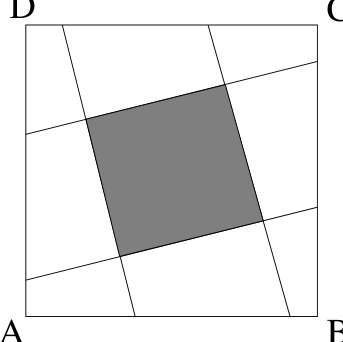
Un architetto di grido è stato chiamato per progettare un enorme centro commerciale alla periferia della città. L’intero centro commerciale deve essere edificato in un quadrato di lato 240 metri. Il progetto dell’architetto prevede che la pianta del centro commerciale sia l’intersezione di due parallelogrammi. Il primo di essi ha due lati opposti, ciascuno di lunghezza 120 metri, che giacciono rispettivamente sui lati e del quadrato, mentre il secondo ha due lati opposti (sempre di lunghezza 120 metri) che giacciono sui lati e .
Dette la massima e la minima area possibile della pianta del centro commerciale, quanto vale ? (vedi figura)
Topic: Geometria piana Abilita: Ragionamento geometrico Area: Geometria Fonte: apri PDF p.3
This is the problem.
A crying architect was called in to design a huge shopping mall on the outskirts of the city. The entire shopping centre shall be built on a square of 240 metres on the side. The architect’s design foresees that the plan of the shopping centre is the intersection of two parallelograms. The first has two opposite sides, each 120 metres long, lying respectively on the sides and of the square, while the second has two opposite sides (always 120 metres long) lying on the sides and .
If you owe the maximum and the minimum possible area of the mall plant, how much is ? (see figure)
src_archimede_2003_pubblico__Q17
problema 18
Nel parco della città si trova un’interessante scultura astratta, che è stata ottenuta nel seguente modo. Dato un cubo di lato , si immagini di tagliarlo con un piano in modo da ottenere un esagono regolare e di costruire su quest’ultimo un prisma esagonale retto infinito. La scultura è l’intersezione del cubo con il prisma infinito. Qual è il suo volume?
Topic: Logica, giochi, strategie Abilita: Lettura attenta del testo Area: Combinatoria, Logica e Probabilita Fonte: apri PDF p.4
This is the main reason for the change in the price of the product.
In the city park is an interesting abstract sculpture, which was obtained as follows. Given a side cube , imagine cutting it with a plane so as to obtain a regular hexagon and building on the latter an infinitely straight hexagonal prism. The sculpture is the intersection of the cube with the infinite prism. What’s the volume?
src_archimede_2003_pubblico__Q18
problema 19
Alla fine di una dura giornata di lavoro, Nicola e Gianmarco vanno a prendere un aperitivo in uno dei bar vicini al comune. Per passare il tempo giocano a una variante Matelandese dell‘“uomo nero”. All’inizio del gioco, ciascuno di loro ha quattro carte, una per ogni seme, e Gianmarco ha in più una carta speciale (l‘“uomo nero”).
Al primo turno di gioco, Nicola pesca a caso una carta tra quelle di Gianmarco e le ripone tra le proprie. A questo punto, se possiede due carte dello stesso seme le scarta entrambe, altrimenti le conserva tutte. Al turno successivo tocca a Gianmarco proseguire pescando una carta a caso da quelle di Nicola, e così via. Vince chi resta senza carte.
Qual è (in percentuale, se decimale dare la parte intera) la probabilità di vittoria di Nicola?
Topic: Geometria piana Abilita: Ragionamento geometrico Area: Geometria Fonte: apri PDF p.4
This is the main reason for the change in the price of the product.
At the end of a hard day’s work, Nicola and Gianmarco go for an aperitif at one of the nearby bars. To pass the time, they play a Matelandian variant of the “black man”. At the beginning of the game, each of them has four cards, one for each seed, and Gianmarco has a special card (the “black man”).
In the first round of the game, Nicola randomly catches a card from among those of Gianmarco and sets it between his own. At this point, if he has two leaves of the same seed, he throws them both away, or else he keeps them all. In the next turn, it is up to Janmarko to continue to catch a random card from Nicola’s cards, and so on. Whoever gets out of cards wins.
What is (in percentage, if decimal give the whole part) the probability of Nicholas’ victory?
src_archimede_2003_pubblico__Q19
problema 20
Nel parco di Matelandia, una celebre scultura è formata da due cilindri retti di raggio 10 dm (cioè diametro 20 dm) e altezza 20 dm che si intersecano in modo che i loro assi siano incidenti nel loro punto medio e perpendicolari. Qual è il volume della scultura in dm³?
Topic: Teoria dei Numeri Abilita: Riconoscimento di pattern Area: Aritmetica e Teoria dei Numeri Fonte: apri PDF p.4
This is the main reason for the change in the price of the product.
In the Matelandia park, a famous sculpture is formed by two straight cylinders of 10 dm radius (i.e. 20 dm diameter) and 20 dm height that intersect so that their axes are incidental in their middle and perpendicular points. What is the volume of the sculpture in dm3?