Tassello rimosso dalla figura Kangourou
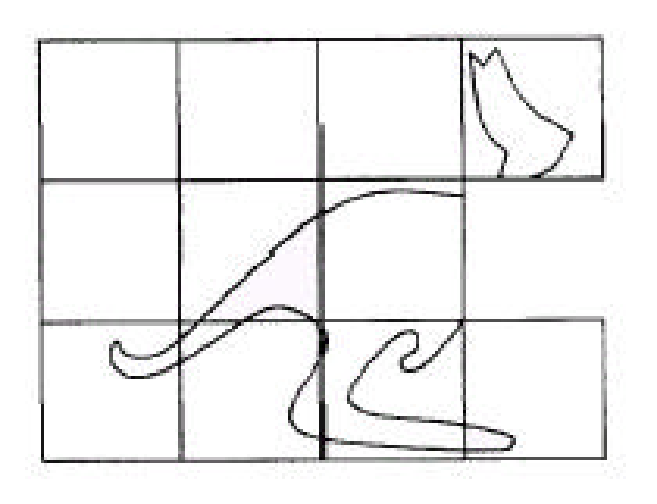
Quale tra i tasselli quadrati, presentati qui sotto, è stato rimosso dalla grande figura a destra rappresentante un Kangourou?
Topic: Logica, giochi, strategie Abilita: Riconoscimento di pattern Area: Combinatoria, Logica e Probabilita Risposta: B Fonte: apri PDF p.1
Table removed from figure Kangourou
Which of the square brackets shown below has been removed from the large figure on the right representing a kangaroo?
Answer: B src_kangourou_2002_ecolier__Q01
Calcolo della somma alternata di 2
Eseguite il calcolo seguente: 2 + 2 – 2 + 2 – 2 + 2 – 2 + 2 – 2 + 2. Quanto otteni?
A. 0 B. 2 C. 4 D. 12
E. 20
Topic: Teoria dei Numeri Abilita: Manipolazione algebrica Area: Aritmetica e Teoria dei Numeri Risposta: C Fonte: apri PDF p.1
Calculation of the alternate sum of 2
Do the following calculation: 2 + 2 2 + 2 2 + 2 2 + 2 2 + 2 2 2 + 2. How much do you get?
A. 0 B. 2 C. 4 D. 12
E. 20
Answer: C src_kangourou_2002_ecolier__Q02
Peso di un melone in arance
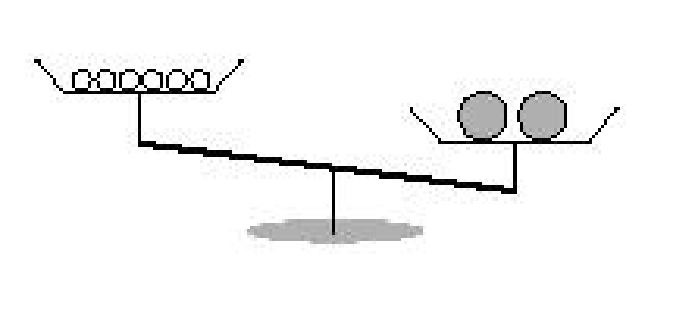
Su un piatto della bilancia rappresentata nella figura
vi sono 6 arance,uguali fra loro, e sull’altro 2 meloni, uguali fra loro. Quando noi mettiamo sul piatto delle arance un altro melone, esattamente uguale ai dueEcolier 2002. Pagina N. 2 precedenti, la bilancia risulta in equilibrio. Il peso di un melone è allora:
A. lo stesso di 2 arance B. lo stesso di 3 arance
C. lo stesso di 4 arance
D. lo stesso di 5 arance
E. lo stesso di 6 arance
Topic: Algebra Abilita: traduzione del testo Area: Algebra e Analisi Risposta: E Fonte: apri PDF p.1
Weight of an orange melon
On one plate of the scale shown in the figure, there are 6 oranges, equal to each other, and on the other, two melons, equal to each other. When we put another melon on the orange plate, exactly the same as the two
The Commission shall adopt implementing acts in accordance with the opinion of the European Parliament. This item is not intended to be used. The balance sheet is in balance. The weight of a melon is then:
A. The same as 2 oranges B. The same as 3 C oranges. The same as 4 D oranges. The same as 5 E oranges. The same as 6 oranges.
Answer: E src_kangourou_2002_ecolier__Q03
Battiti del cuore in un’ora
Il cuore umano batte approssimativamente 70 volte al minuto. Quante volte batte il cuore approssimativamente in un’ora?
A. 42 000 B. 7 000 C. 4 200 D. 700 E. 420
Topic: Teoria dei Numeri Abilita: Stima e approssimazione Area: Aritmetica e Teoria dei Numeri Risposta: C Fonte: apri PDF p.2
Heart rate in one hour
The human heart beats about 70 times a minute. How many times does the heart beat approximately in an hour?
A. 42 000 B. 7 000 C. 4 200 D. 700 E. 420
Answer: C src_kangourou_2002_ecolier__Q04
Differenza perimetri quadrato e rettangolo
\begin{document}
\begin{tikzpicture}[scale=0.45]
  \draw (0,0) rectangle (10,10);
  \draw (3,0) -- (3,10);
  \node[above left] at (0,10) {$A$};
  \node[above] at (3,10) {$M$};
  \node[above right] at (10,10) {$B$};
  \node[below right] at (10,0) {$C$};
  \node[below] at (3,0) {$T$};
  \node[below left] at (0,0) {$D$};
\end{tikzpicture}
\end{document}
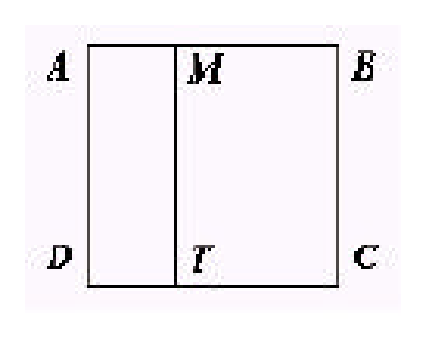
ABCD è un quadrato. I suoi lati misurano 10 cm. AMTD è un rettangolo, il cui lato minore misura 3 cm. Di quanti centimetri è più lungo il perimetro del quadrato rispetto a quello del rettangolo AMTD?
A. 14 cm B. 10 cm C. 7 cm D. 6 cm E. 4 cm
Topic: Geometria piana Abilita: Ragionamento geometrico Area: Geometria Risposta: A Fonte: apri PDF p.2
Different square and rectangular perimeter
\begin{document}
\begin{tikzpicture}[scale=0.45]
  \draw (0,0) rectangle (10,10);
  \draw (3,0) -- (3,10);
  \node[above left] at (0,10) {$A$};
  \node[above] at (3,10) {$M$};
  \node[above right] at (10,10) {$B$};
  \node[below right] at (10,0) {$C$};
  \node[below] at (3,0) {$T$};
  \node[below left] at (0,0) {$D$};
\end{tikzpicture}
\end{document}
ABCD is a square. Its sides are 10 centimeters long. AMTD is a rectangle, the smallest side of which measures 3 cm. How many centimetres is the perimeter of the square longer than that of the AMTD rectangle?
A. 14 cm B. 10 cm C. 7 cm D. 6 cm E. 4 cm
Answer: A src_kangourou_2002_ecolier__Q05
Libri da spostare per pareggiare i ripiani
Una libreria è formata da 3 ripiani. Sul ripiano più alto vi sono 4 libri, su quello centrale 9 e su quello inferiore 14. Sposto ora un libro dal ripiano inferiore a quello centrale. Quanti libri devo spostare dal ripiano inferiore a quello superiore in modo che il numero dei libri risulti uguale su ogni ripiano?
A. 4
B. 5
C. 6
D. un numero diverso dai precedentiE. un tale numero non esiste
Topic: Teoria dei Numeri, Logica, giochi, strategie Abilita: Casework accurato Area: Aritmetica e Teoria dei Numeri, Combinatoria, Logica e Probabilita Risposta: E Fonte: apri PDF p.2
Books to be moved to level the sheets
A bookstore is made up of three floors. On the upper floor there are four books, on the central floor nine and on the lower floor fourteen. I’m now placing a book on the lower level of the central one. How many books do I have to move from the bottom shelf to the top shelf so that the number of books is the same on each shelf?
A. 4 B. 5 C. 6 D. a number different from the previous ones
E. There is no such number.
Answer: E src_kangourou_2002_ecolier__Q06
Membri del club quando ragazzi=ragazze
12 ragazzi e 8 ragazze sono membri del Club Kangourou della loro città. Ogni settimana 2 nuove ragazze ed un nuovo ragazzo vengono accettati nel Club. Quanti sono i membri del Club il giorno in cui il numero dei ragazzi eguaglia quello delle ragazze?
A. 22
B. 24
C. 28
D. 32
E. 36
Topic: Algebra Abilita: traduzione del testo Area: Algebra e Analisi Risposta: D Fonte: apri PDF p.2
Members of the club when boys = girls
Twelve boys and eight girls are members of the Kangourou Club in their town. Every week, two new girls and a new boy are accepted into the Club. How many members of the club on the day when the number of boys is equal to the number of girls?
A. 22 B. 24 C. 28 D. 32 E. 36
Answer: D src_kangourou_2002_ecolier__Q07
Tassello non ottenibile dal quadrato
Il quadrato che vedete sulla destra viene ritagliato secondo le linee indicate. Quale dei seguenti tasselli non può essere ottenuto in questo modo? Ecolier 2002. Pagina N. 3 I quesiti dal N. 9 al N. 16 valgono 4 punti ciascuno
Topic: Geometria piana Abilita: Riconoscimento di pattern Area: Geometria Risposta: D Fonte: apri PDF p.2
Table not available from square
The square you see on the right is cut in the lines. Which of the following rates cannot be obtained in this way?
The Commission shall adopt implementing acts in accordance with the opinion of the European Parliament. This item is not intended to be used. 3 Questions from N. 9 al N. 16 is worth 4 points each.
Answer: D src_kangourou_2002_ecolier__Q08
Quante volte la cifra 2 da 1 a 24
Cristina abita in una strada corta le cui case sono numerate da 1 a 24. Quante volte viene impiegata la cifra 2 per scrivere i numeri di tutte le case di quella via?
A. 4 B. 7 C. 8
D. 10
E. 16
Topic: Combinatoria Metodo: Conteggio combinatorio Abilita: Conteggio sistematico Area: Combinatoria, Logica e Probabilita Risposta: C Fonte: apri PDF p.3
How many times the number 2 from 1 to 24
Cristina lives on a short street whose houses are numbered from 1 to 24. How many times is the number 2 used to write the numbers of all the houses on that street?
A. 4 B. 7 C. 8 D. 10 E. 16
Answer: C src_kangourou_2002_ecolier__Q09
Numero ottenuto con le operazioni
Aggiungi 17 al più piccolo numero intero di due cifre e dividi il risultato così ottenuto per il più grande intero di una sola cifra. Che numero ottieni?
A. 3 B. 6 C. 9
D. 11
E. 27
Topic: Teoria dei Numeri Abilita: Manipolazione algebrica Area: Aritmetica e Teoria dei Numeri Risposta: A Fonte: apri PDF p.3
Number obtained by operations
Add 17 to the smallest two-digit integer and divide the result by the largest single-digit integer. What number do you get?
A. 3 B. 6 C. 9 D. 11 E. 27
Answer: A src_kangourou_2002_ecolier__Q10
Scrittura mesopotamica del numero 124
In Mesopotamia, nel 2500 avanti Cristo, i numeri venivano scritti nel modo seguente: il simbolo
compariva tante volte quante erano le sessantine, il simbolo
compariva tante volte quante erano le decine tolte le sessantine, il simbolo compariva tante volte quante erano le unità tolte le sessantine e le decine. Ad esempio, il numero 72 veniva scritto così
. Quale fra le seguenti scritture rappresenta il numero 124?
Topic: Teoria dei Numeri Abilita: Riconoscimento di pattern Area: Aritmetica e Teoria dei Numeri Risposta: E Fonte: apri PDF p.3
Mesopotamian writing number 124
In Mesopotamia, in 2500 B.C., numbers were written as follows: the symbol appeared many times as many as the sixty, the symbol appeared many times as many as the tens minus the sixty, the symbol appeared many times as many as the units minus the sixty and the tens. For example, the number 72 was written like this. Which of the following scriptures represents the number 124?
Answer: E src_kangourou_2002_ecolier__Q11
Scomposizione del quadrante in quattro parti
Il quadrante di un orologio viene scomposto in quattro parti. Prendendo queste parti in un ordine opportuno e sommando i numeri contenuti in ciascuna di esse, si ottengono quattro numeri consecutivi. Esiste un solo modo di scomporre il quadrante se si vuole ottenere un tale risultato. Qual è?
Topic: Combinatoria, Teoria dei Numeri Metodo: Analisi per casi Abilita: Casework accurato Area: Aritmetica e Teoria dei Numeri, Combinatoria, Logica e Probabilita Risposta: C Fonte: apri PDF p.3
Composition of the quadrant into four parts
The dial of a clock is broken down into four parts. Taking these parts in an appropriate order and adding the numbers in each of them, four consecutive numbers are obtained. There is only one way to break down the quadrant if you want to get that result. What is it?
Answer: C src_kangourou_2002_ecolier__Q12
Chi e nato il 17 maggio
I giorni di nascita di Giovanna, Stefania, Susanna ed Elena sono (in ordine sparso) il 3 marzo, il 17 maggio, il 20 luglio e il 20 marzo. Stefania e Susanna sono nate lo stesso mese, mentre il compleanno di Giovanna e quello di Susanna cadono in giorni con lo stesso numero. Chi è nato il 17 maggio?
A. Giovanna B. Stefania C. Susanna D. Elena E. non si può rispondere
Topic: Logica, giochi, strategie Abilita: Casework accurato Area: Combinatoria, Logica e Probabilita Risposta: D Fonte: apri PDF p.3
Who was born on 17 May
The dates of birth of Giovanna, Stefania, Susanna and Elena are (in odd order) March 3, May 17, July 20 and March 20. Stefania and Susanna were born in the same month, while Joan’s and Susanna’s birthdays fall in days with the same number. Who was born on May 17?
A. Joan B. I ‘m not sure . I’m not sure. Elena and E. You can’t answer that.
Answer: D src_kangourou_2002_ecolier__Q13
Fiammiferi per lato del rettangolo
Alessandra e Viviana hanno insieme 60 fiammiferi. Usando alcuni di quei fiammiferi, Alessandra costruisce un triangolo in cui ogni lato è formato da 6
Ecolier 2002. Pagina N. 4 fiammiferi allineati. Usando tutti i fiammiferi rimanenti, Viviana costruisce un rettangolo in cui due lati sono ancora formati ciascuno da 6 fiammiferi allineati. Da quanti fiammiferi allineati è formato ciascuno degli altri lati del rettangolo?
A. 30 B. 18
C. 15
D. 12E. 9
Topic: Teoria dei Numeri, Geometria piana Abilita: traduzione del testo Area: Aritmetica e Teoria dei Numeri, Geometria Risposta: C Fonte: apri PDF p.3
Flammable on the side of the rectangle
Alexandra and Viviana have 60 matches together. Using some of those matches, Alexandra builds a triangle in which each side is made up of six
The Commission shall adopt implementing acts in accordance with the opinion of the European Parliament. This item is not intended to be used. Four matches lined up. Using all the remaining matches, Viviana builds a rectangle in which two sides are still each made up of 6 aligned matches. How many aligned matches is each made of the other sides of the rectangle?
A. 30 B. 18
C. 15 D. 12
E. 9
Answer: C src_kangourou_2002_ecolier__Q14
Immagine impossibile della bandiera
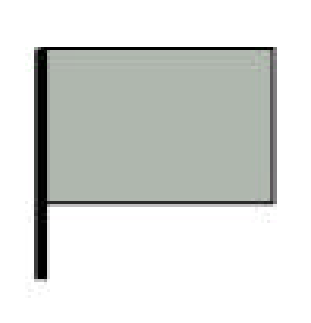
Dalla finestra della sua stanza Carla guarda il muro della casa di fronte. Può vedere che vi è una bandiera rettangolare, come quella in figura, che garrisce al vento. Carla osserva la bandiera in momenti diversi. Supponendo che la bandiera non si strappi per la forza del vento, quale delle 5 immagini riportate sotto Carla non potrà mai vedere?
Topic: Logica, giochi, strategie Abilita: Riconoscimento di pattern Area: Combinatoria, Logica e Probabilita Risposta: B Fonte: apri PDF p.4
Impossible image of the flag
From the window of her room, Carla looks at the wall of the house across the street. You can see that there’s a rectangular flag, like the one in the picture, hanging in the wind. Carla watches the flag at different times. Assuming the flag is not torn by the force of the wind, which of the five images below Carla will she never see?
Answer: B src_kangourou_2002_ecolier__Q15
A che ora esce di casa Matteo
Martina parte da casa alle 6.55 del mattino per arrivare a scuola alle 7.32. Il suo amico Matteo arriva a scuola solo alle 7.45 benché abiti più vicino di lei alla scuola e impieghi 12 minuti in meno per raggiungerla. A che ora esce di casa Matteo?
A. alle 7.07 B. alle 7.20 C. alle 7.25 D. alle 7.30 E. alle 7.33
I quesiti dal N. 17 al N. 24 valgono 5 punti ciascuno
Topic: Teoria dei Numeri Metodo: Ragionamento all’indietro Abilita: traduzione del testo Area: Aritmetica e Teoria dei Numeri Risposta: B Fonte: apri PDF p.4
What time does Matthew leave the house?
Martina leaves home at 6:55 a.m. to get to school at 7:32. Her friend Matteo only arrives at school at 7:45 a.m. although she lives closer to her at school and takes 12 minutes less to reach her. What time does Matteo leave the house?
A. 7:07 B. At 7.20 C. 7: 25 A.M. At 7.30 E. At 7.33am
The questions from N. 17 al N. Twenty-four is worth five points each.
Answer: B src_kangourou_2002_ecolier__Q16
Biscotti totali con ri-impasto dei ritagli

La mamma di Rosalia sta preparando dei biscotti a forma di cuore. Ella li ritaglia da un impasto utilizzando uno stampo che le fornisce un biscotto alla volta. Per ogni 4 biscotti che ottiene dall’impasto, i ritagli ri-impastati sono sufficienti per ottenere un altro biscotto. Dopo la prima passata con lo stampo ha ottenuto 16 biscotti. Quanti biscotti può realizzare in totale?
A. 16 B. 17
C. 18
D. 20E. 21 Ecolier 2002. Pagina N. 5
Topic: Teoria dei Numeri Metodo: Ricorsione Abilita: Riconoscimento di pattern Area: Aritmetica e Teoria dei Numeri Risposta: E Fonte: apri PDF p.4
Total biscuits with re-impasted slices
Rosalia’s mom is making heart-shaped cookies. She slices them from a doughnut using a mold that provides her with one cookie at a time. For every four biscuits you get from the dough, the re-roasted slices are enough to get another biscuit. After the first pass with the mold, he got 16 cookies. How many cookies can you make in total?
A. 16 B. 17
C. 18 D. 20
E. 21
The Commission shall adopt implementing acts in accordance with the opinion of the European Parliament. This item is not intended to be used. 5
Answer: E src_kangourou_2002_ecolier__Q17
Cubetti del tunnel non usati nella piramide
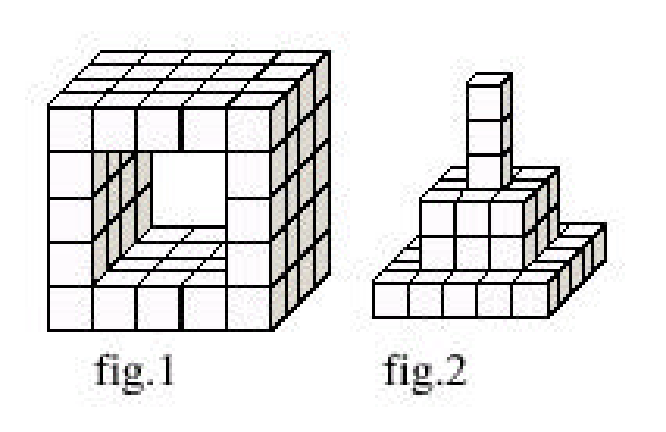
Roberta costruisce un tunnel utilizzando solo cubetti identici fra loro (fig. 1). Quando si è stancata di quella costruzione, smonta il tunnel e costruisce una piramide (fig. 2). Quanti cubetti usati nel tunnel non sono stati utilizzati per costruire la piramide?
A. 34 B. 29
C. 22
D. 18
E. 15
Topic: Geometria solida Metodo: Conteggio combinatorio Abilita: Conteggio sistematico Area: Geometria Risposta: D Fonte: apri PDF p.5
Tunnel cubes not used in pyramid
Roberta builds a tunnel using only identical cubes between them (fig. 1). When she is tired of that construction, she dismantles the tunnel and builds a pyramid (fig. 2). How many cubes were used in the tunnel that weren’t used to build the pyramid?
A. 34 B. 29 C. 22 D. 18 E. 15
Answer: D src_kangourou_2002_ecolier__Q18
Chi non puo ottenere 20
I numeri da 1 a 9 sono scritti ciascuno su un cartoncino. Alessandro ha i cartoncini con i numeri
, Marta con i numeri
e Federico con i numeri
. Utilizzando i propri cartoncini una e una sola volta ciascuno e due delle quattro operazioni +, –, ×, : (eventualmente due volte la stessa), ognuno dei tre ragazzi può ottenere diversi risultati. Chi non potrà mai ottenere 20?A. Solo Alessandro B. Solo Marta C. Solo Federico
D. Alessandro e Marta
E. Tutti possono ottenere 20
Topic: Teoria dei Numeri Metodo: Analisi per casi Abilita: Casework accurato Area: Aritmetica e Teoria dei Numeri Risposta: B Fonte: apri PDF p.5
Who can’t get 20
The numbers 1 through 9 are each written on a cardboard. Alexander has the cards with the numbers , Marta with the numbers and Federico with the numbers . Using their cards once and only once each and two of the four operations +, , ×, : (possibly twice the same), each of the three boys can achieve different results. Who can’t ever get 20?
A. Just Alexander B. Just Marta C. Just Federico .
D. Alexander and Martha E. Everyone can get 20
Answer: B src_kangourou_2002_ecolier__Q19
Minimo colori per il reticolo di cannucce
Utilizzando cannucce colorate (ogni cannuccia ha un solo colore), ti proponi di costruire un reticolo come quello in figura (in cui ogni lato di ogni quadratino è realizzato con una sola cannuccia). Vuoi che nessuna cannuccia venga a contatto con cannucce dello stesso colore. Qual è il minimo numero di colori diversi che ti consente di realizzare il tuo progetto?
A. 2
B. 3 C. 4 D. 5 E. 8
Topic: Combinatoria Metodo: parita Abilita: Ragionamento geometrico Area: Combinatoria, Logica e Probabilita Risposta: C Fonte: apri PDF p.5
Minimum colours for the straw web
Using colored straws (each straw has only one color), you propose to build a lattice like the one in the figure (in which each side of each square is made with only one straw). You don’t want any strawberries coming into contact with strawberries of the same color. What’s the minimum number of different colors that you can use to make your project?
A. 2 B. 3 C. 4 D. 5 E. 8
Answer: C src_kangourou_2002_ecolier__Q20
Posizione di arrivo di Matteo
28 ragazzi partecipano ad una gara di corsa. Il numero dei ragazzi che sono arrivati dopo Matteo è il doppio del numero dei ragazzi che sono arrivati prima di Matteo. In quale posizione è arrivato Matteo?
A. sedicesimo B. diciassettesimo C. ottavo D. nono E. decimo
Topic: Algebra Abilita: traduzione del testo Area: Algebra e Analisi Risposta: E Fonte: apri PDF p.5
*Matteo’s arrival position *
Twenty-eight boys are taking part in a race. The number of boys who came after Matthew is twice the number of boys who came before Matthew. In what position did Matthew arrive?
A. 16th B. 17th C. Eighth D. Nine E. the tenth
Answer: E src_kangourou_2002_ecolier__Q21
Chilometri alla prossima cifra tutte diverse
Il contachilometri della mia auto indica che sono stati percorsi 187 569 Km, un numero le cui cifre sono tutte diverse fra loro. Dopo quanti chilometri succederà ancora, la prossima volta?
A. 13776 B. 12431 C. 431 D. 21 E. 1
Topic: Combinatoria Abilita: Conteggio sistematico Area: Combinatoria, Logica e Probabilita Risposta: D Fonte: apri PDF p.5
Kilometers to the next digit all different *
My car’s meter indicates that we’ve traveled 187,569 miles, a number whose numbers are all different. After how many miles will it happen again, next time?
A. 13776 B. 12431 C. 431 D. 21 E. 1
Answer: D src_kangourou_2002_ecolier__Q22
Massimi punti di intersezione di tre figure
Disegna su un foglio un cerchio, un quadrato e un triangolo in modo che i loro contorni si intersechino (a due a due) nel maggior numero possibile di punti. Qual è questo numero?
Ecolier 2002. Pagina N. 6
A. 14
B. 16 C. 18 D. 20 E. 22
Topic: Geometria piana, Combinatoria Metodo: Conteggio combinatorio Abilita: Ragionamento geometrico Area: Combinatoria, Logica e Probabilita, Geometria Risposta: D Fonte: apri PDF p.5
Maximum intersection points of three figures
Draw on a sheet a circle, a square and a triangle so that their contours intersect (two to two) in as many points as possible. What’s this number?
The Commission shall adopt implementing acts in accordance with the opinion of the European Parliament. This item is not intended to be used. 6
A. 14 B. 16 C. 18 D. 20 E. 22
Answer: D src_kangourou_2002_ecolier__Q23
Ultime tre lettere della sequenza di 2002
Utilizzando le lettere A, B, C componi la sequenza formata da 2002 lettere che inizia con
A B C B A B C B A B C B A B C B A……. e prosegue ripetendo questo blocco di lettere. Quali sono le ultime tre lettere?A. ABC B. BCB C. CBA D. BAB
E. CAB
Risposte Ecolier 2002. Pagina N. 1 Kangourou Italia Gara del 21 marzo 2002 Categoria Ècolier Per studenti di quarta e quinta elementare Soluzioni
La risposta corretta è segnalata tra parentesi rotonde dopo il numero del quesito.
Topic: Combinatoria Metodo: congruenze Abilita: Riconoscimento di pattern Area: Combinatoria, Logica e Probabilita Risposta: D Fonte: apri PDF p.6
The last three letters of the 2002 sequence
Using the letters A, B, C you make up the sequence formed by 2002 letters starting with A B C B A B C B A B C B B A A… And he keeps repeating this block of letters. What are the last three letters?
A. ABC B. BCB C. CBA D BAB
E. CAB
The Commission has not yet taken any further action. This item is not intended to be used. 1 Kangourou Italy Competition of 21 March 2002 Category Schools For fourth and fifth graders Solutions
The correct answer is indicated in round brackets after the question number.
Answer: D src_kangourou_2002_ecolier__Q24