Calcolo (2008-200-8)+2008
(2008 – 200 – 8) + 2008 = ? A) 3008 B) 3888 C) 3800 D) 3808 E) 2808
Topic: Teoria dei Numeri Abilita: Manipolazione algebrica Area: Aritmetica e Teoria dei Numeri Risposta: D Fonte: apri PDF p.1
This appropriation is intended to cover expenditure relating to the implementation of the programme.
(2008 – 200 – 8) + 2008 = ? A) 3008 B) 3888 C) 3800 D) 3808 E) 2808
Answer: D src_kangourou_2008_benjamin_marzo__Q01
Sagome ottenibili accostando due triangoli equilateri
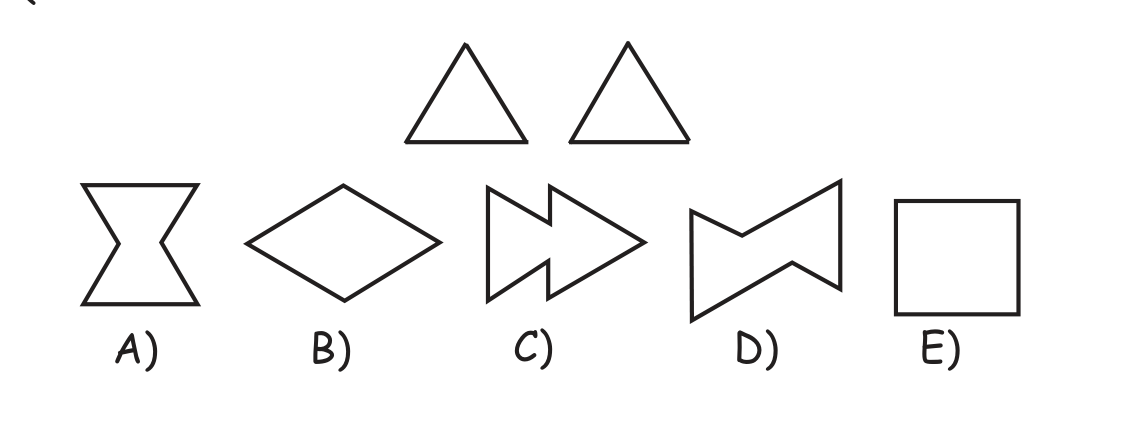
Carolina ha 2 cartoncini uguali a forma di triangolo equilatero come quelli rappresentati nella figura. Li accosta o li sovrappone parzialmente su un foglio, poi traccia sul foglio il contorno della figura ottenuta. Solo una delle sagome che vedi sotto non può essere ottenuta con questo procedimento. Quale?
Topic: Geometria piana Abilita: Ragionamento geometrico Area: Geometria Risposta: E Fonte: apri PDF p.1
Sagoms obtained by approaching two equilateral triangles
Carolina has 2 identical equilateral triangle-shaped cards as shown in the figure. He draws them together or overlaps them partially on a sheet, then traces the outline of the resulting figure on the sheet. Only one of the shapes you see below cannot be obtained with this procedure. What kind?
Answer: E src_kangourou_2008_benjamin_marzo__Q02
Ordine di tre trasformazioni di un numero
Iole, Lidia, Nadia e Pina giocano a trasformare numeri. Lidia ha detto 3 e le altre sono intervenute ciascuna una e una sola volta e l’ultima ha detto 14. Sai che Iole ha moltiplicato per 3, Nadia ha sottratto 1 e Pina ha sommato 2. In quale ordine sono intervenute le tre ragazze dopo Lidia? A) IPN B) PIN C) INP D) NIP E) PNI
Topic: Algebra, Logica, giochi, strategie Metodo: Analisi per casi Abilita: traduzione del testo Area: Algebra e Analisi, Combinatoria, Logica e Probabilita Risposta: B Fonte: apri PDF p.1
Order of three transformations of a number
Iole, Lidia, Nadia and Pina are playing numbers. Lidia said 3 and the others each intervened once and only once and the last one said 14. You know Iole multiplied by 3, Nadia subtracted 1 and Pina added 2. In what order did the three girls after Lydia intervene? (a) IPN (b) PIN (c) INP (d) NIP (e) PNI
Answer: B src_kangourou_2008_benjamin_marzo__Q03
Quante bandiere hanno parte nera pari a 3/5

Nella scuola dei pirati ogni studente deve cucire una bandiera bianca e nera, rispettando la condizione seguente: la parte nera deve coprire esattamente i tre quinti della bandiera. Quante delle seguenti bandiere rispettano questa condizione? A) Nessuna B) Una C) Due D) Tre E) Quattro A) B) C) D) E) Testi_08.qxp 9-03-2008 14:56 Pagina 10
Pag. Pag. 11 11 Kang 2008 Kang 2008
Topic: Teoria dei Numeri Abilita: Manipolazione algebrica Area: Aritmetica e Teoria dei Numeri Risposta: C Fonte: apri PDF p.1
How many flags have a black part equal to 3/5
In the pirate school, each student must sew a black and white flag, subject to the following condition: the black part must cover exactly three-fifths of the flag. How many of the following flags meet this requirement? A) None B) One C) Two D) Three E) Four A) B) C) D) E) Text_08.qxp 9-03-2008 14:56
I’m going to pay. I’m going to pay. 11 11 Kang 2008 Kang
Answer: C src_kangourou_2008_benjamin_marzo__Q04
Posizionare 12 monete su circonferenze e diametri
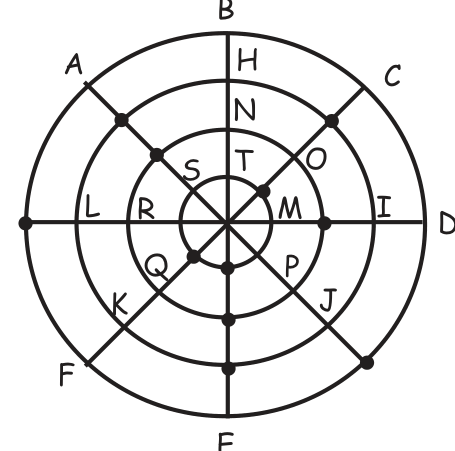
Anna vuole posizionare 12 monete sulla figura in modo che vi siano esattamente 3 monete su ogni circonferenza ed esattamente 3 monete su ognuno dei quattro diametri. Ha già messo 11 monete. In quale punto dovrà mettere la restante? A) B B) J C) L D) D E) F
Topic: Combinatoria, Logica, giochi, strategie Abilita: Conteggio sistematico Area: Combinatoria, Logica e Probabilita Risposta: D Fonte: apri PDF p.2
Place 12 coins on circumferences and diameters
Anna wants to place 12 coins on the figure so that there are exactly 3 coins on each circumference and exactly 3 coins on each of the four diameters. He’s already put in 11 coins. Where will you put the rest of it? A) B B) J C) L D) D E) F
Answer: D src_kangourou_2008_benjamin_marzo__Q05
Completare tavola di moltiplicazione parziale
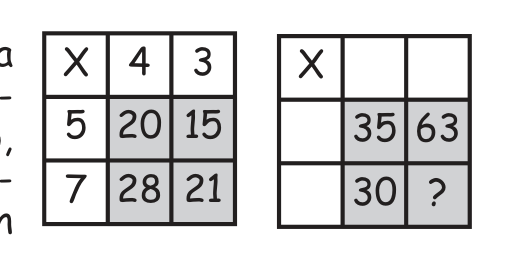
Quella che vedi nella prima figura è una tavola di moltiplicazione. Anche quella nella seconda figura è una tavola di moltiplicazione dove, purtroppo, alcuni numeri sono stati cancellati. Qual è il numero che si deve trovare nella casella indicata con un punto di domanda ? A) 54 B) 56 C) 65
D) 36 E) 42
Topic: Teoria dei Numeri Abilita: Riconoscimento di pattern Area: Aritmetica e Teoria dei Numeri Risposta: A Fonte: apri PDF p.2
Complete the partial multiplication table
What you see in the first figure is a multiplication table. The second figure is also a multiplication table where, unfortunately, some numbers have been deleted. What is the number to be found in the box with a question mark ? A) 54 B) 56 C) 65 D) 36 E) 42
Answer: A src_kangourou_2008_benjamin_marzo__Q06
Quanti numeri di tre cifre con somma cifre 3
“La somma delle cifre di un numero intero, rappresentato in forma decimale, vale 3”: quanti numeri di tre cifre verificano questa condizione? A) 3 B) 4 C) 5 D) 6 E) 8
Topic: Teoria dei Numeri, Combinatoria Metodo: Conteggio combinatorio Abilita: Conteggio sistematico Area: Aritmetica e Teoria dei Numeri, Combinatoria, Logica e Probabilita Risposta: D Fonte: apri PDF p.2
*Three-digit numbers with a sum of 3 digits *
‘The sum of the digits of an integer represented in decimal form is 3’: how many three-digit numbers verify this condition? A) 3 B) 4 C) 5 D) 6 E) 8
Answer: D src_kangourou_2008_benjamin_marzo__Q07
Perimetro del pentagono triangolo+quadrato isoperimetrici
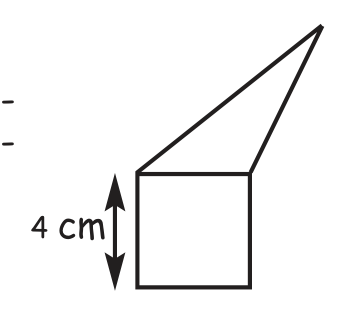
Il triangolo ed il quadrato in figura hanno lo stesso perimetro. Qual è il perimetro dell’intera figura (cioè del pentagono)? A) 12 cm B) 24 cm C) 28 cm D) 32 cm E) Dipende dagli angoli del triangolo.
Topic: Geometria piana Abilita: Ragionamento geometrico Area: Geometria Risposta: B Fonte: apri PDF p.2
*Perimeter of the triangle pentagon + square isoperimetric *
The triangle and the square in the figure have the same perimeter. What is the perimeter of the whole figure (i.e. the pentagon)? A) 12 cm B) 24 cm C) 28 cm D) 32 cm E) Depends on the angles of the triangle.
Answer: B src_kangourou_2008_benjamin_marzo__Q08
Percentuale grigia di un fregio periodico

Quello che vedi in figura è un fregio, costituito da mattonelle quadrate bianche o grigie, tutte uguali per dimensione. Quale percentuale del fregio è grigia? A) 50% B) 60% C) 62,5% D) 66,6 % E) 75%
Topic: Teoria dei Numeri Abilita: Riconoscimento di pattern Area: Aritmetica e Teoria dei Numeri Risposta: B Fonte: apri PDF p.2
Percentage of grey of a periodic brake
What you see in the figure is a frieze, made up of white or grey square bricks, all of which are the same size. What percentage of the grain is gray? A) 50% B) 60% C) 62,5% D) 66,6 % E) 75%
Answer: B src_kangourou_2008_benjamin_marzo__Q09
Triangolo isoscele con angolo non acuto
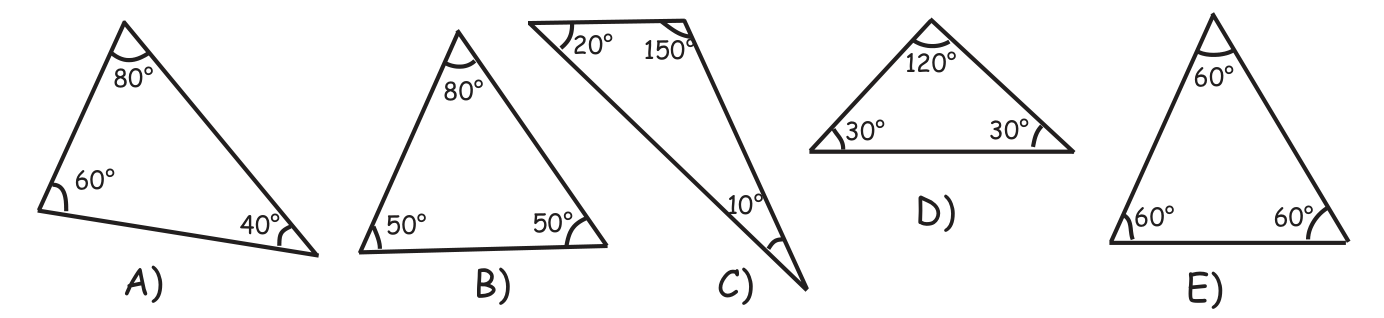
Pierino crede che, se un triangolo è isoscele (cioè ha 2 angoli uguali), allora tutti i suoi angoli siano acuti (cioè minori di 90°). Quale delle seguenti figure può convincerlo del contrario? A B C D E F H N T O I J P M L K S R Q X 4 3 5 20 15 7 28 21 X 35 63 30 ? 4 cm
60° 80° 40° 50° 80° 50° 150° 20° 10° 30° 120° 30° 60° 60° 60° A) B) C) D) E) Testi_08.qxp 9-03-2008 14:56 Pagina 11
Pag. Pag. 12 12 Kang 2008 Kang 2008 I quesiti dal N. 11 al N. 20 valgono 4 punti ciascuno
Topic: Geometria piana Abilita: Ragionamento geometrico Area: Geometria Risposta: D Fonte: apri PDF p.2
Isosceles triangle with non-acute angle
Pierino believes that if a triangle is isosceles (i.e. has 2 equal angles), then all its angles are sharp (i.e. less than 90°). Which of the following figures can convince you otherwise? A B C D E F H N T O I J P M L K S R Q X 4 3 5 20 15 7 28 21 X 35 63 30 ? 4 cm
The Commission shall adopt delegated acts in accordance with the opinion of the Committee on Budgetary Control and with the opinion of the Committee on Budgetary Control and the Committee on Budgetary Control.
I’m going to pay. I’m going to pay. 12 12 Kang 2008 Kang 2008 Questions from N. 11 al N. 20 is worth 4 points each.
Answer: D src_kangourou_2008_benjamin_marzo__Q10
Con quanti fiammiferi e impossibile fare un triangolo
Ho dei fiammiferi tutti uguali fra loro con cui devo costruire un triangolo: posso allinearli, ma non sovrapporli o spezzarli e devo usarli tutti. Con quale numero di fiammiferi, fra i seguenti, ciò è impossibile? A) 7 B) 6 C) 5 D) 4 E) 3
Topic: Geometria piana, Teoria dei Numeri Abilita: Ragionamento geometrico Area: Aritmetica e Teoria dei Numeri, Geometria Risposta: D Fonte: apri PDF p.3
With so many matches, it’s impossible to make a triangle.
I have matches that are all the same between them that I have to build a triangle with: I can align them, but I can’t overlay or break them and I have to use them all. With what number of matches, of the following, is this impossible? A) 7 B) 6 C) 5 D) 4 E) 3
Answer: D src_kangourou_2008_benjamin_marzo__Q11
Frazione d’acqua che arriva in B dopo biforcazioni
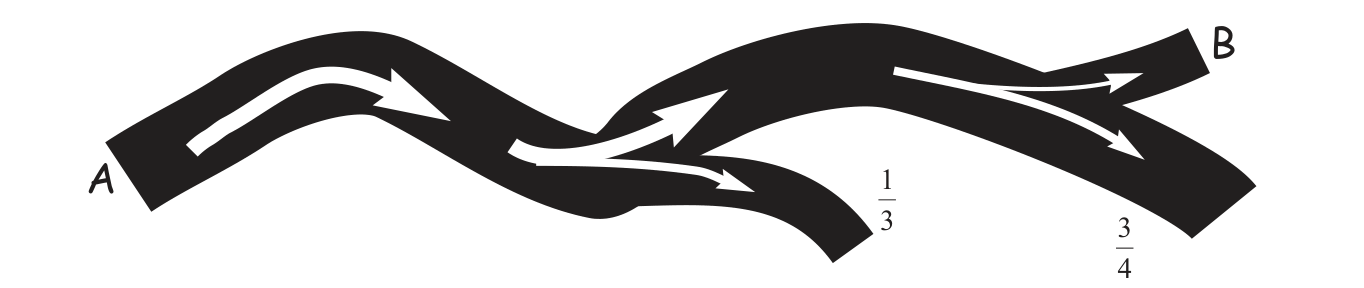
Guarda la figura sottostante: un canale ha origine in A e dopo poco si biforca; il ramo di destra riceve 1/3 dell’acqua, quello di sinistra il resto. Più avanti il secondo ramo si divide in due sottorami, di cui quello di destra riceve i 3/4 dell’acqua che fluisce nel ramo e quello di sinistra il resto. Che frazione dell’acqua partita da A arriva nel punto B? A) B) C) D) E) I dati sono insufficienti.
Topic: Teoria dei Numeri Abilita: Manipolazione algebrica Area: Aritmetica e Teoria dei Numeri Risposta: D Fonte: apri PDF p.3
Fraction of water reaching B after forking
Look at the figure below: a channel has its origin in A and shortly afterwards forks; the right branch receives 1/3 of the water, the left one the rest. Later the second branch divides into two sub-branches, of which the one on the right receives 3/4 of the water flowing into the branch and the one on the left the rest. What fraction of the water that starts from A gets to point B? (A) B) C) D) E) The data are insufficient.
Answer: D src_kangourou_2008_benjamin_marzo__Q12
valore della lettera pound
I cinque diversi simboli impiegati qui sotto rappresentano ciascuno una diversa cifra e le operazioni indicate sono tutte corrette. @ + @ + @ = ∗
+ # + # = &
∗+ & = £ Quanto vale “£”? A) 0 B) 2 C) 6 D) 8 E) 9
Topic: Teoria dei Numeri, Logica, giochi, strategie Metodo: Analisi per casi Abilita: Riconoscimento di pattern Area: Aritmetica e Teoria dei Numeri, Combinatoria, Logica e Probabilita Risposta: E Fonte: apri PDF p.3
weight of the letter pound
The five different symbols used below each represent a different number and the operations indicated are all correct. @ + @ + @ = # + # + # = & + & = £ How much is £? A) 0 B) 2 C) 6 D) 8 E) 9
Answer: E src_kangourou_2008_benjamin_marzo__Q13
Minimo n persone a 60 sedie senza posto isolato libero
60 sedie sono distribuite attorno ad una tavola rotonda. Un certo numero, chiamiamolo n, di persone sono sedute a questa tavola in modo che chi volesse unirsi a loro, dovrebbe per forza sedersi su una sedia accanto ad una già occupata. Il più piccolo valore di n che rende possibile la situazione è A) 15 B) 20 C) 30 D) 40 E) 58
Topic: Combinatoria, Logica, giochi, strategie Metodo: Principio di estremalita Abilita: Conteggio sistematico Area: Combinatoria, Logica e Probabilita Risposta: B Fonte: apri PDF p.3
Minimum n persons in 60 seats with no isolated free seat
60 chairs are arranged around a round table. A certain number, let’s call it n, of people are sitting at this table so that anyone who wants to join them should necessarily sit in a chair next to someone already occupied. The smallest value of n that makes the situation possible is A) 15 B) 20 C) 30 D) 40 E) 58
Answer: B src_kangourou_2008_benjamin_marzo__Q14
Minimo N persone a 60 sedie ognuna vicino a un altra
Come nel quesito precedente, 60 sedie sono distribuite attorno ad una tavola rotonda. Un certo numero, chiamiamolo N, di persone sono sedute a questa tavola in modo che ogni persona sia seduta accanto ad un’altra. Il più piccolo valore di N che rende possibile la situazione è A) 40 B) 30 C) 20 D) 10 E) Nessuno dei precedenti.
Topic: Combinatoria, Logica, giochi, strategie Metodo: Principio di estremalita Abilita: Lettura attenta del testo Area: Combinatoria, Logica e Probabilita Risposta: E Fonte: apri PDF p.3
Minimum N people in 60 seats each next to each other
As in the previous question, 60 chairs are arranged around a round table. A certain number, let’s call it N, of people are sitting at this table so that each person is sitting next to the other. The smallest value of N that makes the situation possible is A) 40 B) 30 C) 20 D) 10 E) None of the above.
Answer: E src_kangourou_2008_benjamin_marzo__Q15
Numeri di 2 cifre con unita maggiore delle decine
Quanti numeri di 2 cifre sono tali che la cifra delle unità sia maggiore della cifra delle decine? A) 26 B) 18 C)9 D) 30 E) 36 1 6 11 12 2 3 1 4 A B 1 3 3 4 Testi_08.qxp 9-03-2008 14:56 Pagina 12
Pag. Pag. 13 13 Kang 2008 Kang 2008
Topic: Combinatoria, Teoria dei Numeri Metodo: Conteggio combinatorio Abilita: Conteggio sistematico Area: Aritmetica e Teoria dei Numeri, Combinatoria, Logica e Probabilita Risposta: E Fonte: apri PDF p.3
Two-digit numbers with a unit of decimal place
How many 2-digit numbers are such that the number of units is greater than the number of tens? A) 26 B) 18 C) 9 D) 30 E) 36 1 6 11 12 2 3 1 4 A B 1 3 3 4 Text_08.qxp 9-03-2008 14:56 Page 12
I’m going to pay. I’m going to pay. 13 13 Kang 2008 Kang
Answer: E src_kangourou_2008_benjamin_marzo__Q16
Quanti punteggi diversi con due frecce
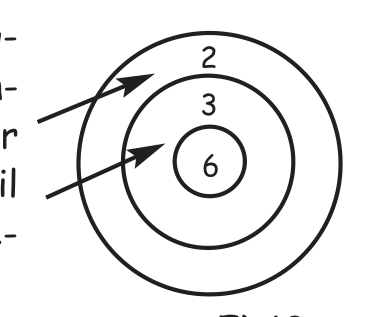
Giovanna tira due frecce verso il bersaglio. Il punteggio ottenuto è la somma dei punteggi realizzati con le singole frecce (0 se la freccia non colpisce il bersaglio): per esempio nella figura vediamo una situazione nella quale il punteggio ottenuto è 5. Quanti diversi punteggi può ottenere Giovanna? A) 4 B) 6 C) 8 D) 9 E) 10
Topic: Combinatoria Metodo: Conteggio combinatorio Abilita: Conteggio sistematico Area: Combinatoria, Logica e Probabilita Risposta: D Fonte: apri PDF p.4
How many different scores with two arrows
Joan throws two arrows at the target. The resulting score is the sum of the scores achieved with the individual arrows (0 if the arrow does not hit the target): for example, in the figure we see a situation in which the resulting score is 5. How many different scores can Giovanna get? A) 4 B) 6 C) 8 D) 9 E) 10
Answer: D src_kangourou_2008_benjamin_marzo__Q17
Eta di Ada e Ivo da condizioni lineari
Ada ed Ivo compiono gli anni oggi. Fra due anni Ivo avrà il doppio dell’età che aveva due anni fa, mentre fra tre anni Ada avrà il triplo dell’età che aveva tre anni fa. Quale delle seguenti affermazioni è corretta? A) Ivo ha un anno più di Ada
B) Ada ha un anno più di Ivo
C) Ada e Ivo hanno la stessa età
D) Ivo ha due anni più di Ada E) Ada ha due anni più di Ivo
Topic: Algebra Abilita: traduzione del testo Area: Algebra e Analisi Risposta: C Fonte: apri PDF p.4
Eta of Ada and Ivo under linear conditions
Ada and Ivo are coming of age today. In two years Ivo will be twice as old as he was two years ago, while in three years Ada will be three times as old as she was three years ago. Which of the following is correct? A) Ivo is one year older than Ada B) Ada is one year older than Ivo C) Ada and Ivo are the same age D) Ivo is two years older than Ada E) Ada is two years older than Ivo
Answer: C src_kangourou_2008_benjamin_marzo__Q18
Quale costruzione di cubetti non e realizzabile
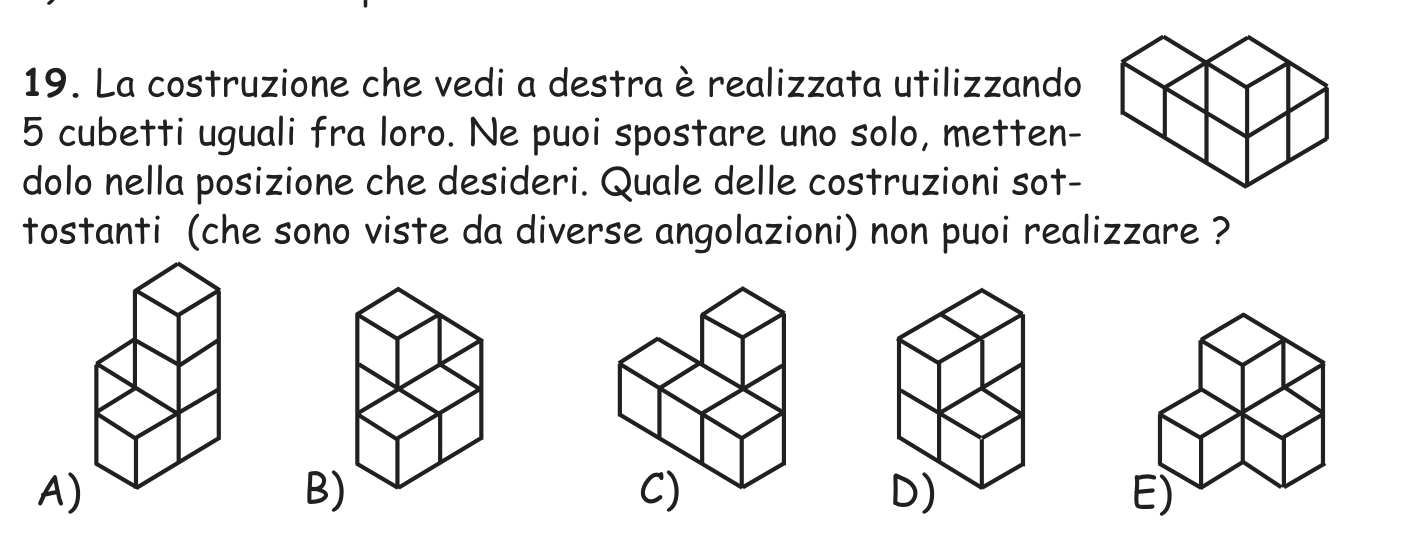
La costruzione che vedi a destra è realizzata utilizzando 5 cubetti uguali fra loro. Ne puoi spostare uno solo, mettendolo nella posizione che desideri. Quale delle costruzioni sottostanti (che sono viste da diverse angolazioni) non puoi realizzare ?
Topic: Geometria solida Abilita: Ragionamento geometrico Area: Geometria Risposta: C Fonte: apri PDF p.4
Which construction of cubes is not feasible
The construction you see on the right is done using 5 equal cubes. You can move only one, put it in the position you want. Which of the underlying constructions (which are seen from different angles) can you not make ?
Answer: C src_kangourou_2008_benjamin_marzo__Q19
Quanti quadrati di 4 caselle in scacchiera 8x8
Quanti quadrati di 4 caselle ci sono in una scacchiera di 8 x 8 caselle? A) 64 B) 49 C) 48 D) 36 E) 16 I quesiti dal N. 21 al N. 30 valgono 5 punti ciascuno
Topic: Combinatoria, Geometria piana Metodo: Conteggio combinatorio Abilita: Conteggio sistematico Area: Combinatoria, Logica e Probabilita, Geometria Risposta: B Fonte: apri PDF p.4
How many squares of 4 boxes in a chessboard 8x8
How many squares of 4 boxes are there in an 8 x 8 box chessboard? A) 64 B) 49 C) 48 D) 36 E) 16 Questions from N. 21 al N. 30 is worth 5 points each.
Answer: B src_kangourou_2008_benjamin_marzo__Q20
3 su 16:9
Il vecchio schermo televisivo aveva i lati che stavano fra loro nel rapporto 4:3, mentre i nuovi schermi hanno i lati che stanno nel rapporto 16:9. Vogliamo vedere un DVD che riempie esattamente tutto lo schermo del vecchio televisore su un nuovo schermo 16:9. Se l’altezza del filmato coincide esattamente con l’altezza dello schermo, allora la percentuale d’area non utilizzata del nuovo schermo è A) 15 % B) 20 % C) 25 % D) 30 %
E) dipendente dalle misure dello schermo.
Topic: Geometria piana Abilita: Manipolazione algebrica Area: Geometria Risposta: C Fonte: apri PDF p.4
3 su 16:9
The old TV display had sides that were in the 4:3 aspect ratio, while the new displays have sides that are in the 16:9 aspect ratio. We want to see a DVD that fills exactly the entire screen of the old TV on a new 16:9 screen. If the height of the footage exactly matches the height of the screen, then the percentage of unused area of the new screen is A) 15 % B) 20 % C) 25 % D) 30 % E) depending on the screen dimensions.
Answer: C src_kangourou_2008_benjamin_marzo__Q21
Indovinare professioni dei tre amici
Un medico, un ingegnere e un musicista sono amici. I loro nomi, non necessariamente nell’ordine, sono: Giorgio, Marco e Nicola. Il medico non ha sorelle e neppure fratelli ed è il più giovane dei tre. Nicola è più vecchio dell’ingegnere ed è sposato con la sorella di Giorgio. Quali nomi hanno, nell’ordine, il medico, l’ingegnere e il musicista? 6 3 2 A) B) C) D) E) Testi_08.qxp 9-03-2008 14:56 Pagina 13
Pag. Pag. 14 14 Kang 2008 Kang 2008 A) Giorgio, Marco, Nicola
B) Nicola, Giorgio, Marco
C) Marco, Giorgio, Nicola D) Marco, Nicola, Giorgio
E) Giorgio, Nicola, Marco 23.Qui a fianco è rappresentata una scacchiera: devi visitarne ogni casella senza mai ripassare da una già visitata, ma puoi muoverti solo in orizzontale o in verticale, non in diagonale. Da dove puoi partire? A) Solo dalla casella centrale.
B) Solo da una casella ai vertici. C) Da una casella bianca. D) Da una qualunque casella grigia. E) Da una casella qualsiasi.
Topic: Logica, giochi, strategie Abilita: Casework accurato Area: Combinatoria, Logica e Probabilita Risposta: C Fonte: apri PDF p.4
Guessing the professions of the three friends
A doctor, an engineer and a musician are friends. Their names, not necessarily in order, are: George, Mark, and Nicholas. The doctor has no sisters or even brothers and is the youngest of the three. Nicola is older than the engineer and is married to George’s sister. What are the names of the doctor, engineer and musician? The Commission has decided to extend the scope of this Regulation to the following areas:
I’m going to pay. I’m going to pay. 14 14 Kang 2008 Kang 2008 A) George, Mark, Nicholas B) Nicholas, George, Mark C) Marcus, George, Nicholas D) Marcus, Nicholas, George E) George, Nicholas, Mark 23.Here next to you is a chessboard: you must visit each box without ever going back from a previously visited one, but you can only move horizontally or vertically, not diagonally. Where can you start? A) Only from the central box. B) Only from a box to the top. C) From a white box. D) From any grey box. E) From any box.
Answer: C src_kangourou_2008_benjamin_marzo__Q22
Da dove partire per visitare ogni casella
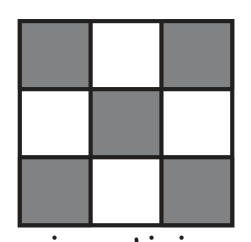
- Risposta D) Osserviamo che, potendosi muovere solo in orizzontale o in verticale, quando si passa da una casella alla successiva il colore della casella cambia: non potrò quindi coprire tutto il percorso se parto da una casella bianca, perché le caselle bianche sono meno delle grigie. Partendo invece da una casella grigia si può completare il percorso come richiesto: se è d’angolo posso completare in orizzontale la riga a cui appartiene, spostarmi in verticale alla riga adiacente, completare questa in orizzontale, passare in verticale all’ ultima riga e completare questa; dalla casella grigia centrale invece si possono coprire tutte le caselle una sola volta se ci si sposta in una casell
Topic: Combinatoria, Logica, giochi, strategie Metodo: parita Abilita: Ragionamento geometrico Area: Combinatoria, Logica e Probabilita Risposta: D Fonte: apri PDF p.5
Where to start to visit each box
- Answer D) We see that, as you can only move horizontally or vertically, when you move from one box to the next, the color of the box changes. So I can’t cover the whole path if I start from a white box, because the white boxes are less than grey. Starting instead from a grey box you can complete the path as required: if it is dangle I can complete horizontally the line to which it belongs, move vertically to the adjacent line, complete this horizontally, go vertically to the last line and complete this; from the central grey box you can cover all the boxes only once if you move into a box
Answer: D src_kangourou_2008_benjamin_marzo__Q23
Lunghezza percorso quarto autobus
\begin{document}
\begin{tikzpicture}[scale=1.5, every node/.style={font=\small}]
  \coordinate (A) at (0, 2);
  \coordinate (B) at (1, 2);
  \coordinate (H) at (0, 1);
  \coordinate (C) at (1, 1);
  \coordinate (D) at (2, 1);
  \coordinate (G) at (0, 0);
  \coordinate (F) at (1, 0);
  \coordinate (E) at (2, 0);
  \draw (A) -- (B) -- (C) -- (H) -- (A);
  \draw (H) -- (G) -- (F) -- (C);
  \draw (F) -- (E) -- (D) -- (C);
  \node[above left] at (A) {A};
  \node[above right] at (B) {B};
  \node[left] at (H) {H};
  \node[above right] at (C) {C};
  \node[right] at (D) {D};
  \node[below left] at (G) {G};
  \node[below] at (F) {F};
  \node[below right] at (E) {E};
\end{tikzpicture}
\end{document}
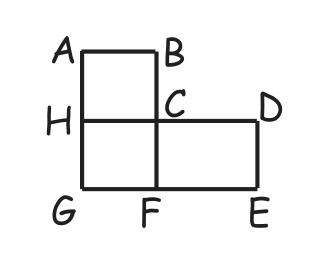
Il disegno mostra la mappa dei trasporti di una città. Ci sono 4 autobus che seguono un percorso circolare:
- il percorso del primo, C-D-E-F-G-H-C, è lungo 17 km;
- il percorso del secondo, A-B-C-F-G-H-A, è lungo 12 km;
- il percorso del terzo, A-B-C-D-E-F-G-H-A, è lungo 20 km. Quanti chilometri è lungo il percorso C-F-G-H-C del quarto? A) 5 B) 8
C) 9 D) 12 E) 15
Topic: Algebra, Logica, giochi, strategie Abilita: traduzione del testo Area: Algebra e Analisi, Combinatoria, Logica e Probabilita Risposta: C Fonte: apri PDF p.5
Length of fourth bus route
\begin{document}
\begin{tikzpicture}[scale=1.5, every node/.style={font=\small}]
  \coordinate (A) at (0, 2);
  \coordinate (B) at (1, 2);
  \coordinate (H) at (0, 1);
  \coordinate (C) at (1, 1);
  \coordinate (D) at (2, 1);
  \coordinate (G) at (0, 0);
  \coordinate (F) at (1, 0);
  \coordinate (E) at (2, 0);
  \draw (A) -- (B) -- (C) -- (H) -- (A);
  \draw (H) -- (G) -- (F) -- (C);
  \draw (F) -- (E) -- (D) -- (C);
  \node[above left] at (A) {A};
  \node[above right] at (B) {B};
  \node[left] at (H) {H};
  \node[above right] at (C) {C};
  \node[right] at (D) {D};
  \node[below left] at (G) {G};
  \node[below] at (F) {F};
  \node[below right] at (E) {E};
\end{tikzpicture}
\end{document}
The drawing shows the transportation map of a city. There are 4 buses that follow a circular route: - the route of the first, C-D-E-F-G-H-C, is 17 km long; - the route of the second, A-B-C-F-G-H-A, is 12 km long; - the route of the third, A-B-C-D-E-F-G-H-A, is 20 km long. How many miles is the C-F-G-H-C path of the fourth? A) 5 B) 8 C) 9 D) 12 E) 15
Answer: C src_kangourou_2008_benjamin_marzo__Q24
Somma carte del primo saggio (parita)
Una scatola contiene sette carte numerate da 1 a 7. Due saggi pescano a caso delle carte dalla scatola: il primo ne prende tre, il secondo due delle rimanenti; le ultime due restano chiuse nella scatola. Il primo saggio, dopo aver guardato solo i numeri scritti sulle carte da lui pescate, dice al secondo: “Sono certo che la somma dei numeri riportati sulle tue carte è pari”. Quanto vale la somma dei numeri riportati sulle carte pescate dal primo saggio? A) 10 B) 12 C) 6 D) 9 E) 15
Topic: Combinatoria, Logica, giochi, strategie Metodo: Analisi per casi, congruenze Abilita: Casework accurato Area: Combinatoria, Logica e Probabilita Risposta: B Fonte: apri PDF p.5
*Sum of cards from the first essay (parity) *
A box contains seven cards numbered from 1 to 7. Two wise men randomly take the cards out of the box: the first takes three, the second two of the remaining cards; the last two remain closed in the box. The first essay, after looking only at the numbers written on the cards he has caught, says to the second: “I am sure that the sum of the numbers shown on your cards is equal”. How much is the sum of the numbers shown on the cards the first essay read? A) 10 B) 12 C) 6 D) 9 E) 15
Answer: B src_kangourou_2008_benjamin_marzo__Q25
Distanza tra i due punti piu lontani su retta
Su una retta sono disegnati i punti A, B, C e D in un ordine non precisato. Si sa che AB è lungo 13, BC è lungo 11, CD è lungo 14 e DA è lungo 12. Qual è la distanza tra i due punti più lontani? A) 14 B) 38 C) 50 D) 25
E) Nessuna delle precedenti.
Topic: Geometria piana, Logica, giochi, strategie Metodo: Analisi per casi Abilita: Casework accurato Area: Combinatoria, Logica e Probabilita, Geometria Risposta: D Fonte: apri PDF p.5
Distance between the two most distant points on a straight line
A, B, C and D shall be drawn on a straight line in an unspecified order. You know AB is long 13, BC is long 11, CD is long 14 and DA is long 12. What’s the distance between the two most distant points? A) 14 B) 38 C) 50 D) 25 E) None of the above.
Answer: D src_kangourou_2008_benjamin_marzo__Q26
Ordine degli scatti girando intorno all aiuola
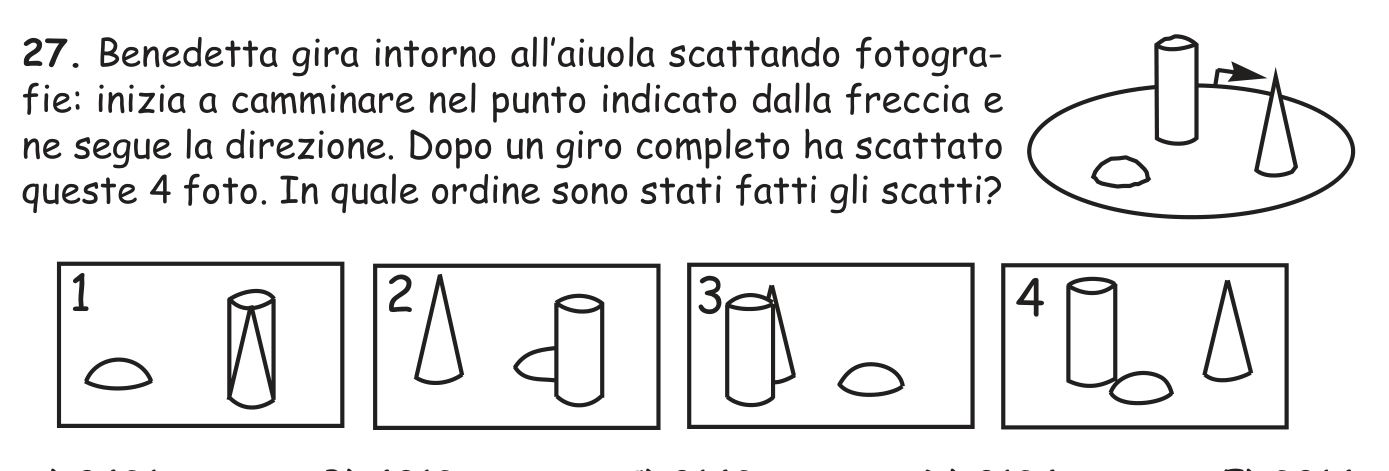
Benedetta gira intorno all’aiuola scattando fotografie: inizia a camminare nel punto indicato dalla freccia e ne segue la direzione. Dopo un giro completo ha scattato queste 4 foto. In quale ordine sono stati fatti gli scatti? A) 2431 B) 4213 C) 2143 D) 2134 E) 3214 A H G F E D C B 4 3 2 1 Testi_08.qxp 9-03-2008 14:56 Pagina 14
Pag. Pag. 15 15 Kang 2008 Kang 2008
Topic: Geometria solida, Logica, giochi, strategie Abilita: Ragionamento geometrico Area: Combinatoria, Logica e Probabilita, Geometria Risposta: C Fonte: apri PDF p.5
Order of shots rotating around the shell
Benedetta turns around the arrow taking photographs: she begins to walk at the point indicated by the arrow and follows its direction. After a full tour, he took these four pictures. In what order were the shots taken? A) 2431 B) 4213 C) 2143 D) 2134 E) 3214 A H G F and D C B 4 3 2 1 Texts_08.qxp 9-03-2008 14:56 Page 14
I’m going to pay. I’m going to pay. 15 15 Kang 2008 Kang 2008
Answer: C src_kangourou_2008_benjamin_marzo__Q27
Crittoaritmo KAN+GA=ROO, valore RN-KG
Nell’uguaglianza KAN + GA = ROO ogni lettera rappresenta una delle dieci cifre e lettere diverse rappresentano cifre diverse. Allora la differenza RN – KG vale A) 10 B) 11 C) 12 D) 21 E) 22
Topic: Teoria dei Numeri, Logica, giochi, strategie Metodo: Analisi per casi Abilita: Casework accurato Area: Aritmetica e Teoria dei Numeri, Combinatoria, Logica e Probabilita Risposta: B Fonte: apri PDF p.6
This is the total value of the input data.
In the KAN + GA = ROO equality, each letter represents one of the ten digits and different letters represent different digits. So the difference RN KG is A) 10 B) 11 C) 12 D) 21 E) 22
Answer: B src_kangourou_2008_benjamin_marzo__Q28
Somma aree dei 27 triangoli equilateri
\begin{document}
\begin{tikzpicture}[scale=1.2]
  \draw (0,0) -- (4,0);
  \draw (0.5,0.866) -- (3.5,0.866);
  \draw (1,1.732) -- (3,1.732);
  \draw (1.5,2.598) -- (2.5,2.598);
  \draw (0,0) -- (2,3.464);
  \draw (1,0) -- (2.5,2.598);
  \draw (2,0) -- (3,1.732);
  \draw (3,0) -- (3.5,0.866);
  \draw (0.5,0.866) -- (2,3.464);
  \draw (1.5,0.866) -- (2.5,2.598);
  \draw (2.5,0.866) -- (3,1.732);
  \draw (4,0) -- (2,3.464);
  \draw (3,0) -- (1.5,2.598);
  \draw (2,0) -- (1,1.732);
  \draw (1,0) -- (0.5,0.866);
  \draw (3.5,0.866) -- (2,3.464);
  \draw (2.5,0.866) -- (1.5,2.598);
  \draw (1.5,0.866) -- (1,1.732);
\end{tikzpicture}
\end{document}
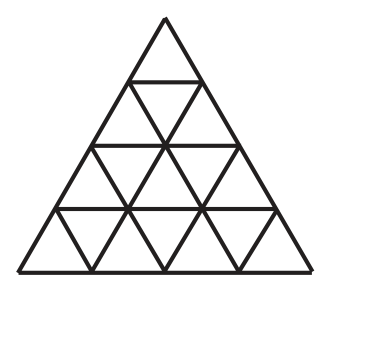
L’area del triangolo equilatero più grande nel disegno vale 16. Allora la somma delle aree dei 27 triangoli equilateri che puoi individuare nel disegno vale A) 56 B) 61 C) 83 D) 87 E) 88
Topic: Geometria piana, Combinatoria Metodo: Conteggio combinatorio Abilita: Conteggio sistematico Area: Combinatoria, Logica e Probabilita, Geometria Risposta: D Fonte: apri PDF p.6
Summary of the areas of the 27 equilateral triangles
\begin{document}
\begin{tikzpicture}[scale=1.2]
  \draw (0,0) -- (4,0);
  \draw (0.5,0.866) -- (3.5,0.866);
  \draw (1,1.732) -- (3,1.732);
  \draw (1.5,2.598) -- (2.5,2.598);
  \draw (0,0) -- (2,3.464);
  \draw (1,0) -- (2.5,2.598);
  \draw (2,0) -- (3,1.732);
  \draw (3,0) -- (3.5,0.866);
  \draw (0.5,0.866) -- (2,3.464);
  \draw (1.5,0.866) -- (2.5,2.598);
  \draw (2.5,0.866) -- (3,1.732);
  \draw (4,0) -- (2,3.464);
  \draw (3,0) -- (1.5,2.598);
  \draw (2,0) -- (1,1.732);
  \draw (1,0) -- (0.5,0.866);
  \draw (3.5,0.866) -- (2,3.464);
  \draw (2.5,0.866) -- (1.5,2.598);
  \draw (1.5,0.866) -- (1,1.732);
\end{tikzpicture}
\end{document}
The area of the largest equilateral triangle in the drawing is 16. So the sum of the areas of the 27 equilateral triangles that you can find in the diagram is A) 56 B) 61 C) 83 D) 87 E) 88
Answer: D src_kangourou_2008_benjamin_marzo__Q29
Numero di ragazzi che si spartiscono le mele
Alcuni ragazzi si sono spartiti una certa quantità di mele in modo che tutti ne avessero lo stesso numero. Se i ragazzi fossero stati due in meno, ognuno di loro avrebbe ricevuto una mela in più. Se poi fossero stati tre in meno, ognuno di loro avrebbe ricevuto due mele in più. Quanti sono i ragazzi? A) 6 B) 8 C) 9 D) 10 E) 12 Testi_08.qxp 9-03-2008 14:56 Pagina 15
Categoria Benjamin Per studenti del primo e secondo anno della scuola media inferiore
I quesiti dal N.1 al N. 10 valgono 3 punti ciascuno
Topic: Teoria dei Numeri Metodo: manipolazione algebrica Abilita: traduzione del testo Area: Aritmetica e Teoria dei Numeri Risposta: A Fonte: apri PDF p.6
The number of boys sharing apples
Some boys shared a certain amount of apples so that everyone had the same number. If the boys were two fewer, they’d each get an extra apple. If they were three fewer, they would each receive two more apples. How many kids are there? A) 6 B) 8 C) 9 D) 10 E) 12 Texts_08.qxp 9-03-2008 14:56 Page 15
Category Benjamin For first and second year students of lower secondary school
Questions from N.1 to N. 10 is worth 3 points each.
Answer: A src_kangourou_2008_benjamin_marzo__Q30