Stima dei coriandoli nel sacchetto con cattura e ricattura
Hai un sacchetto di coriandoli e vorresti sapere quanti sono, almeno approssimativamente. Pensi di usare la seguente strategia:
- ne estrai e li contraddistingui con un segno, quindi li rimetti nel sacchetto e mescoli tutti i coriandoli in modo che quelli che hai contrassegnato si possano distribuire uniformemente all’interno del sacchetto;
- ne estrai quindi a caso e scopri che, fra questi , solo due sono stati contrassegnati da te.
Sulla base di questo esperimento, qual è un numero attendibile per i coriandoli contenuti nel sacchetto?
Topic: Probabilita e statistica Abilita: Stima e approssimazione Area: Combinatoria, Logica e Probabilita Risposta: 1750 Fonte: apri PDF p.1
Estimating the confetti in the bag using capture and recapture
You have a bag of confetti and you would like to know how many there are, at least approximately. You think of using the following strategy:
- you take out and mark them with a sign, then put them back in the bag and mix all the confetti so that the ones you marked can distribute uniformly inside the bag;
- you then randomly take out and find that, among these , only two were marked by you.
Based on this experiment, what is a reliable number for the confetti contained in the bag?
Answer: 1750
Rapporto dei volumi di due sfere che appaiono uguali a distanze 1:100
Osservando da lontano due sfere di raggi diversi, esse ti appaiono della stessa grandezza (come, ad esempio, potrebbe accadere per il sole e per la luna). Tuttavia, la distanza della più grande da te è volte la distanza della più piccola (assumi che le distanze siano stimate tra te e i centri delle sfere). Quanto vale il rapporto fra il volume della più grande e il volume della più piccola?
Topic: Geometria solida Abilita: Ragionamento geometrico Area: Geometria Risposta: 1.000.000 Fonte: apri PDF p.1
Ratio of the volumes of two spheres that appear equal at distances 1:100
Observing two spheres of different radii from a distance, they appear to you to be the same size (as, for example, could happen with the sun and the moon). However, the distance of the larger one from you is times the distance of the smaller one (assume that the distances are measured between you and the centers of the spheres). What is the ratio between the volume of the larger one and the volume of the smaller one?
Answer: 1,000,000
Massimo travasi per ripristinare 10 recipienti

Dieci recipienti, non necessariamente della stessa capacità, che possiamo considerare illimitata, contengono ciascuno acqua, non necessariamente nella stessa quantità. Effettuiamo alcuni travasi tra i recipienti; per ogni recipiente, ad ogni travaso, annotiamo la quantità di acqua immessa o prelevata. Ad esempio denotati i recipienti con A, B ecc. e usando sempre la stessa unità di misura potremmo avere un’annotazione come
A B C D E F G H I J travaso 1 +1 0 0 0 0 0 0 0 0 −1 Al termine di queste operazioni si vuole ripristinare in ogni recipiente la quantità di acqua iniziale, minimizzando il numero di travasi. Adottando un’opportuna strategia, quanti travasi potranno essere necessari, al massimo?
Topic: Combinatoria, Algebra Metodo: Principio di estremalita Abilita: generalizzazione Area: Algebra e Analisi, Combinatoria, Logica e Probabilita Risposta: 9 Fonte: apri PDF p.2
Maximum pourings to restore 10 containers
Ten containers, not necessarily of the same capacity, which we can consider unlimited, each contain water, not necessarily in the same quantity. We perform some pourings between the containers; for each container, at each pouring, we note the quantity of water added or removed. For example, denoting the containers with A, B, etc. and always using the same unit of measurement, we could have a note like
A B C D E F G H I J pouring 1 +1 0 0 0 0 0 0 0 0 −1 At the end of these operations we want to restore in each container the initial quantity of water, minimizing the number of pourings. By adopting a suitable strategy, how many pourings might be needed, at most?
Answer: 9
Numero di sviluppi piani diversi di un cubo
\begin{document}
\begin{tikzpicture}
  \draw (0,0) rectangle (1,1);
  \draw (1,0) rectangle (2,1);
  \draw (2,0) rectangle (3,1);
  \draw (3,0) rectangle (4,1);
  \draw (1,1) rectangle (2,2);
  \draw (1,-1) rectangle (2,0);
\end{tikzpicture}
\end{document}
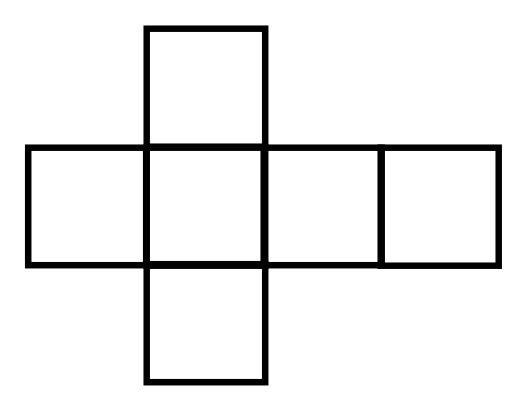
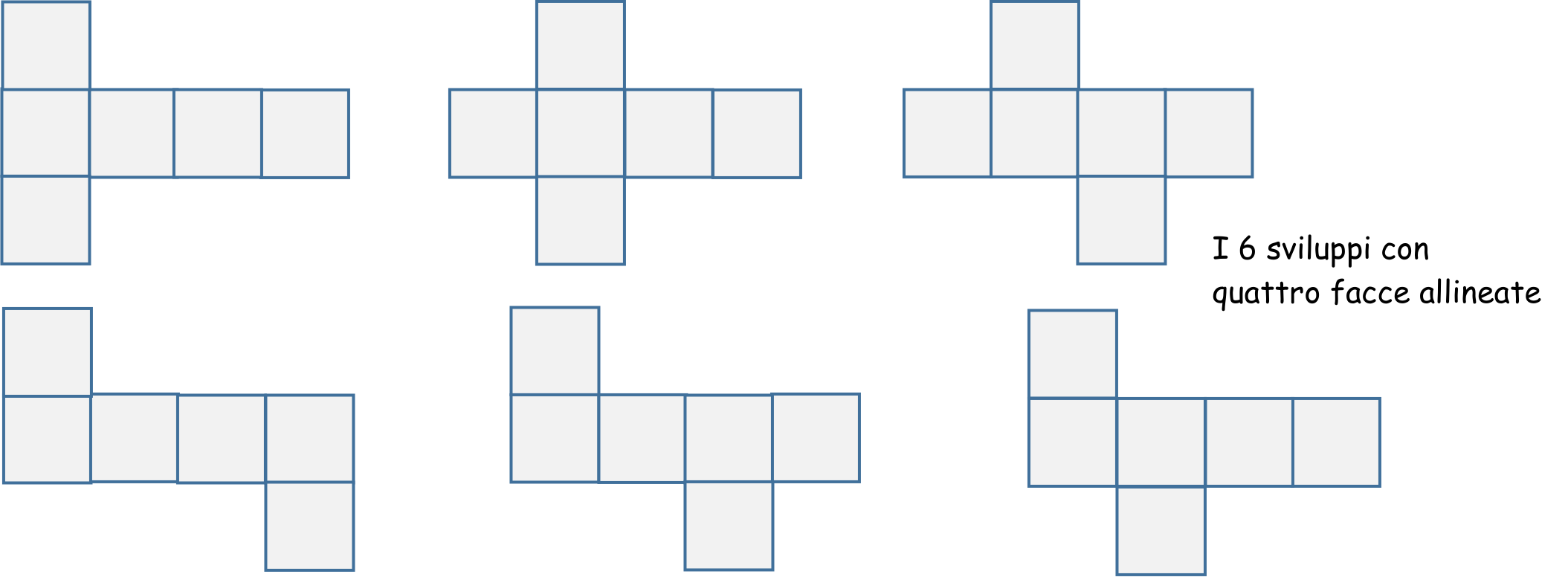
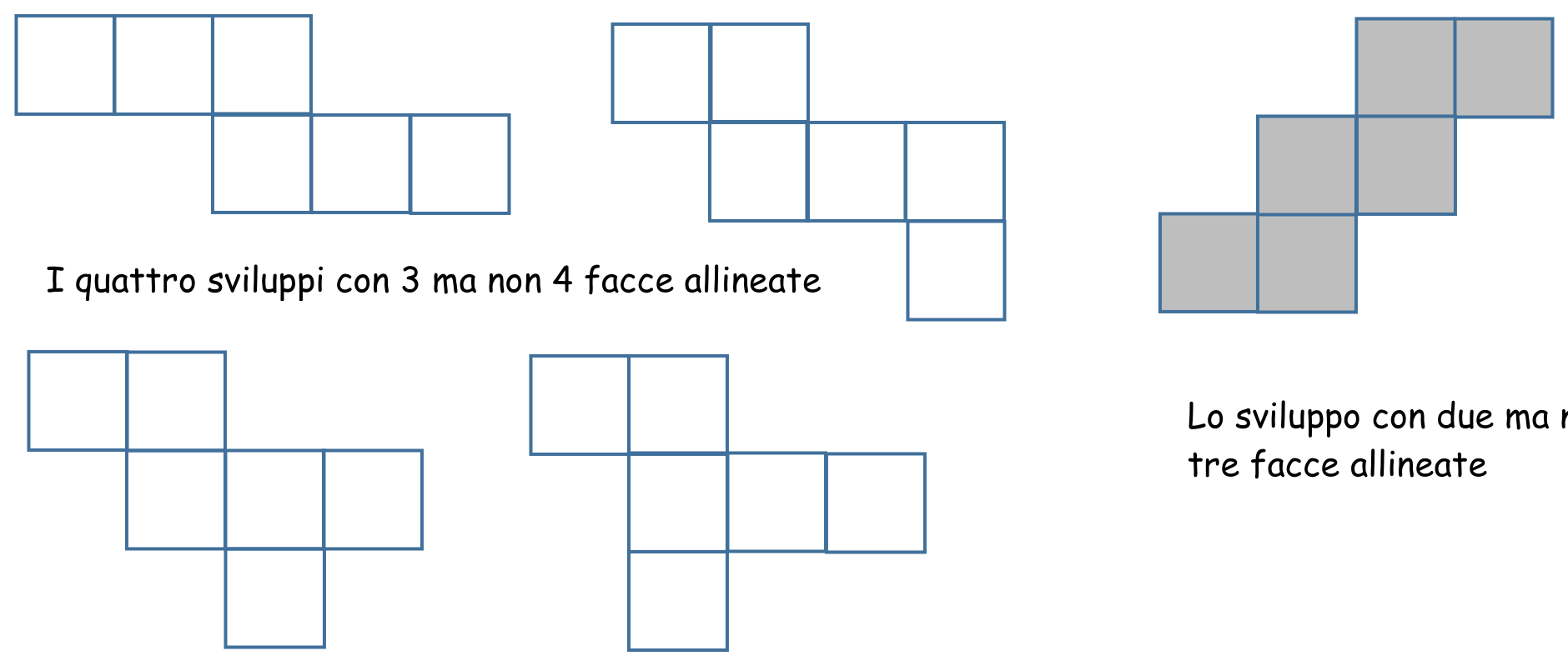
In figura vedi uno sviluppo piano di un cubo, cioè un possibile accostamento in piano delle facce del cubo in modo da poter ricostruire il cubo piegando opportunamente la figura lungo i lati comuni a due facce. Quanti sviluppi piani diversi fra loro ha un cubo, considerando identici due sviluppi ottenibili uno dall’altro per rotazioni e/o riflessioni? (vedi figura)
Topic: Geometria solida, Combinatoria Abilita: Casework accurato Area: Combinatoria, Logica e Probabilita, Geometria Risposta: 11 Fonte: apri PDF p.2
Number of different plane nets of a cube
\begin{document}
\begin{tikzpicture}
  \draw (0,0) rectangle (1,1);
  \draw (1,0) rectangle (2,1);
  \draw (2,0) rectangle (3,1);
  \draw (3,0) rectangle (4,1);
  \draw (1,1) rectangle (2,2);
  \draw (1,-1) rectangle (2,0);
\end{tikzpicture}
\end{document}
In the figure you see a plane net of a cube, that is, a possible arrangement in the plane of the faces of the cube so that you can reconstruct the cube by folding the figure along the sides common to two faces. How many different plane nets of a cube are there, considering identical two developments achievable from each other by rotation and/or reflection? (see figure)
Answer: 11
Riempire griglia mxn con somme colonna costanti
Hai una griglia rettangolare di righe e colonne e vuoi riempirla inserendo, uno per ogni casella, tutti i numeri interi da a in modo che la somma dei numeri inseriti in ciascuna colonna sia sempre la stessa al variare delle colonne. Rispondi alle seguenti domande giustificando le tue risposte. Puoi riuscirci quando
a) e ?
b) e ?
Topic: Combinatoria, Teoria dei Numeri Metodo: monovarianti Abilita: generalizzazione Area: Aritmetica e Teoria dei Numeri, Combinatoria, Logica e Probabilita Risposta: a)No b)Si Fonte: apri PDF p.3
Fill the mxn grid with constant column sums
You have a rectangular grid of rows and columns and you want to fill it up by entering, one for each box, all the integers from to so that the sum of the numbers entered in each column is always the same when the columns vary. Answer the following questions and justify your answers. You can do it when
a) and ?
b) and ?
Answer: a)No b)Yes
Dimostrare c1+..+cn>=n se prodotto ci=1 (AM-GM)
Dimostra che, per qualunque -upla di numeri positivi il cui prodotto sia , si ha
Topic: Disuguaglianze, Algebra Metodo: Disuguaglianze classiche Abilita: Manipolazione algebrica Area: Algebra e Analisi Fonte: apri PDF p.3
Prove c1+..+cn>=n if product ci=1 (AM-GM)
Show that for any -tuple of positive numbers the product of which is ,